

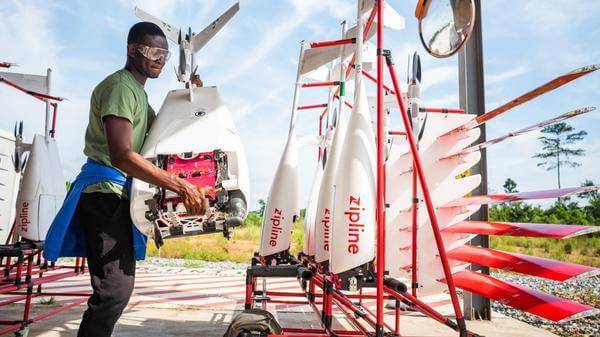

Rwanda is expanding Zipline from a medical-delivery network into something closer to national logistics infrastructure.
In February, the government signed an expansion agreement with Zipline that is intended to give the country nationwide autonomous delivery coverage, add Africa’s first Zipline urban delivery system and establish an autonomous-delivery testing centre.
The deal builds on a relationship that began in 2016 with urgent medical deliveries. Its scale is a useful reminder that healthtech does not have to become a consumer app to reach millions of people.
Logistics is part of the care system
Hospitals and clinics can only use medicines, vaccines and blood products that are physically available when needed.
Traditional supply chains manage that problem through central warehouses, road transport and facility inventory. In remote areas, the model creates a trade-off. A clinic can keep more stock locally and risk wastage, or hold less inventory and risk a delay when an emergency occurs.
Autonomous delivery changes the timing. A facility can request smaller quantities more frequently, including urgent supplies that would otherwise take hours to move by road.
That is why Zipline’s earliest African use cases focused on blood and other time-sensitive medical products. The technology was not trying to replace the clinician. It was trying to make the clinician’s supply chain respond faster.
A 2026 review of drone healthcare logistics in sub-Saharan Africa found that drones are now an established, though unevenly distributed, operational tool in several countries, with the strongest evidence concentrated in Ghana and Rwanda.
Nationwide coverage changes the operating model
Rwanda’s new agreement moves beyond isolated routes.
Nationwide coverage means autonomous delivery has to work as a dependable network across different geographies, facilities and demand patterns. Urban delivery adds another challenge because dense environments require precise routing and a different set of safety considerations from rural drop zones.
The testing centre is equally important. A country that hosts operational testing can build local regulatory and technical experience around autonomous logistics instead of importing every rule after the technology is deployed.
That experience has value beyond healthcare. Once a reliable autonomous network exists, other public services and commercial categories can potentially use the same infrastructure, subject to regulation and economics.
Healthtech infrastructure can be invisible to patients
Consumer health apps often measure scale through downloads, consultations or subscriptions. Logistics platforms operate differently.
A patient may never know that a blood unit, vaccine or medicine arrived by autonomous aircraft. The technology creates value by shortening a supply-chain delay rather than by demanding the patient’s attention.
That can make the business look less glamorous, but it also makes it harder to displace once integrated into public-health operations. Governments and hospitals care about service levels, stock availability, cost and clinical outcomes, not engagement metrics.
The challenge is that public infrastructure depends heavily on contracts and policy. Zipline’s growth is tied to government relationships and to proving that the economics remain competitive against road-based alternatives as the network expands.
Why it matters
Africa’s healthtech conversation often overweights the front end of care: telemedicine, appointment booking and patient apps.
Rwanda’s Zipline expansion shows the size of the opportunity behind the clinic. Supply chains, diagnostics, inventory, claims and facility operations can have just as much impact on patient outcomes.
These businesses also create a different type of moat. They require hardware, regulation, operating data and deep integration with institutions. That is harder to build than another user interface.
For founders, the lesson is not that every healthtech company needs drones. It is that healthcare’s hardest problems are often operational, and infrastructure can scale without becoming consumer-facing.
What to watch
Watch how quickly Rwanda reaches true nationwide service and how the urban delivery network performs once deployed. Delivery time, cost per mission, facility adoption and service reliability will matter more than the number of aircraft.
Also watch whether the testing centre helps Rwanda export regulatory knowledge or attract more autonomous-logistics companies.
Zipline’s decade in the country suggests the most durable healthtech systems may be the ones patients barely notice because the hospital simply has what it needs when it needs it.