
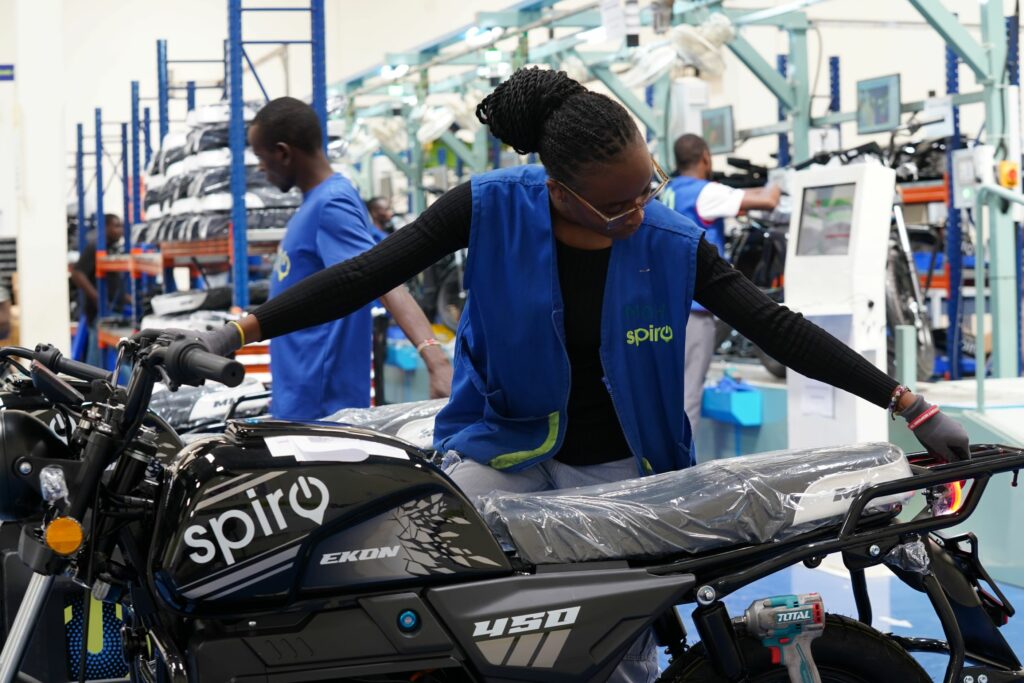
Spiro, one of Africa’s largest electric-mobility operators, has secured an additional $55m in equity from NewTrails Capital, a Chinese investor, taking its latest round to $270m. The follow-on lands weeks after the $215m equity raise the company announced at the start of June, and brings Spiro’s total disclosed funding to roughly $557m. The capital is earmarked for expanding battery-swapping infrastructure, manufacturing, and the company’s energy network.
This is a genuinely fresh, separate tranche rather than a restatement of the earlier raise, and the most interesting detail is not the running total. It is where the new money came from.
A new geography of capital
The earlier $215m drew on the kind of backers, development-linked and founder-affiliated, that have funded African EV to date. The $55m from NewTrails Capital introduces a different source: Chinese growth capital flowing directly into African electric-mobility infrastructure. That matters because China dominates the global supply chain for the batteries, motors, and electric two-wheelers that Spiro’s network runs on. A Chinese investor taking an equity position in an African operator is not just a cheque; it is a tightening of the link between the continent’s emerging EV infrastructure and the industrial base that supplies it.
The signal worth reading is what kind of capital this is. A strategic or industrially-connected backer brings more than money to a hardware-heavy business, supply terms, manufacturing know-how, component access, and that can be a real advantage in a sector where the cost and availability of batteries determine the economics. It can also create dependency, which is the tension this round surfaces and which African operators will increasingly have to navigate as the obvious source of EV capital and components points in one direction.
The numbers to anchor on, and the ones to watch
Spiro reports more than 100,000 electric vehicles deployed and over 2,500 battery-swapping stations across seven markets including Nigeria, Kenya, Uganda, and Rwanda. Deployed vehicles and built stations are the right signals for an infrastructure business, because they are assets on the ground rather than projections, and they are consistent with the operational footprint the company has reported before.
What the funding announcements do not disclose is the unit economics underneath that footprint: the cost per swap station, the utilisation rate, the margin per swap, and crucially how much of the roughly $557m raised is equity versus the debt facilities a capital-intensive network typically also carries. Battery-swap infrastructure only works at density, and density is expensive to build and slow to pay back, so the gap between an impressive station count and a profitable network is where scrutiny belongs. A business that has raised over half a billion dollars is being valued on the bet that the network becomes hard to dislodge once built, not on current returns.
What it signals
The deeper question this round sharpens is ownership of the layer. Spiro is building what amounts to a distributed energy-and-mobility network, and whoever owns that layer holds a strategically important position over pricing, movement data, and the pace of the petrol-to-electric shift. The new tranche means a slice of that ownership now sits with Chinese capital, on top of the development finance and founder vehicles already on the cap table.
TechCocoon Intelligence reads the NewTrails investment as evidence that Africa’s EV infrastructure is being financed largely by foreign capital and built on a foreign supply chain, with the continent’s operators as the deploying layer in between. That is not inherently a problem, it is how a lot of infrastructure gets built, but it is the part African regulators and energy ministries should be watching.
The standing question is whether the public sector helps shape who owns this infrastructure while it is still being laid, or inherits a network that is already built, already financed from abroad, and already supplied from a single geography by the time policy catches up.