
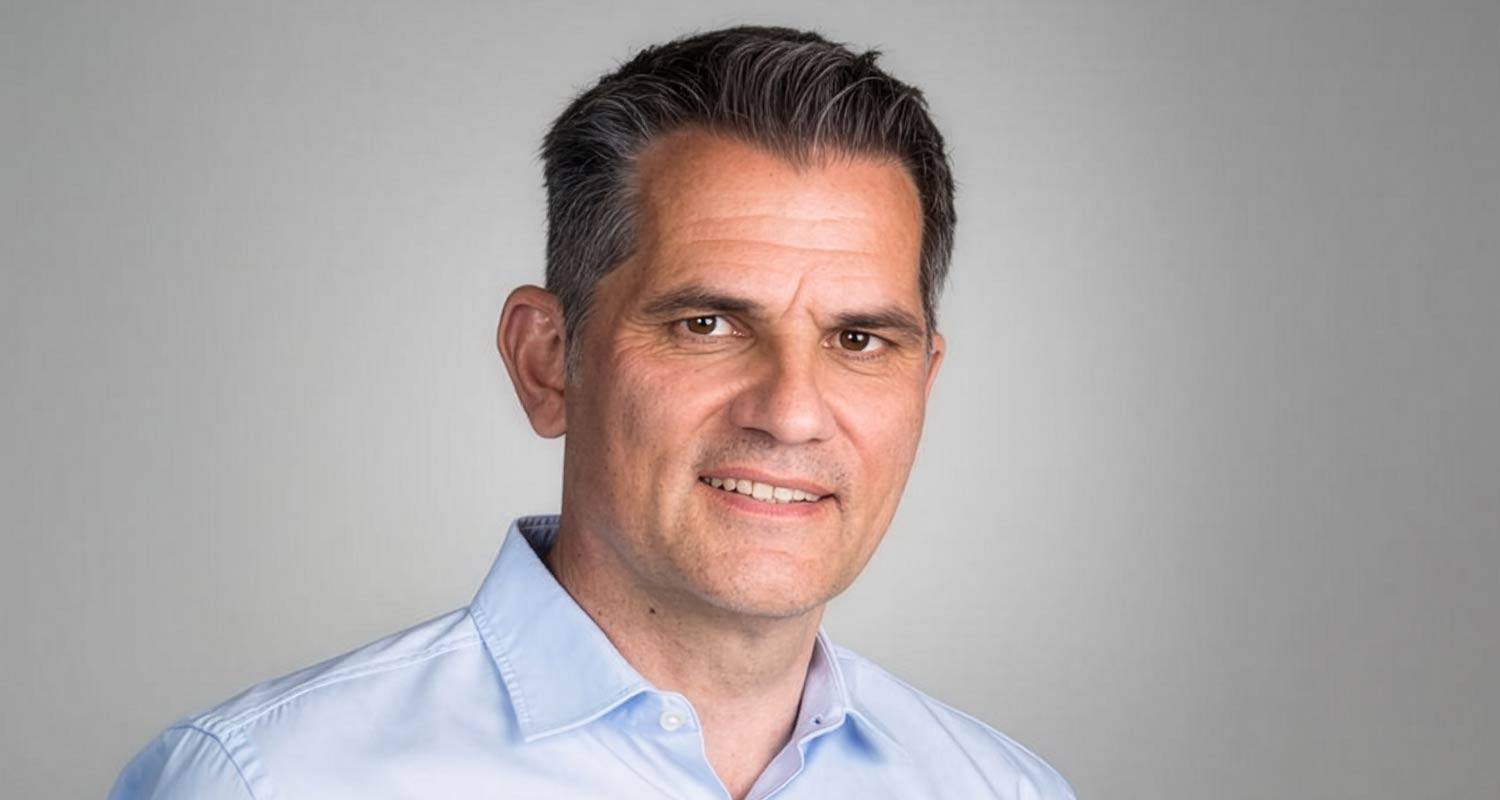
Yoco has named Carsten Höltkemeyer as its new CEO, effective June 1, 2026, after a global search for the person who will lead the South African payments company into its next phase. The appointment comes after a nine-month interim period in which co-founders Bradley Wattrus and Lungisa Matshoba ran the company as co-CEOs, following Katlego Maphai’s decision to step back from the CEO role in September 2025.
This is more than a boardroom update. It is a useful sign of where Yoco believes the harder work now sits.
The company’s first chapter was clear: help independent businesses in South Africa accept card payments. Its next chapter is less simple. Yoco now wants to become a broader operating platform for small businesses, bringing together payments, point-of-sale tools, capital, software, and AI-supported business tools.
That shift changes the assignment. Selling payment devices is one thing. Becoming part of how merchants run their businesses every day is another.
What drew me to Yoco is both the scale of the opportunity and the clarity of its purpose.
— Carsten Höltkemeyer, incoming CEO of Yoco.
Yoco is no longer just a card machine company
Yoco says it now serves more than 200,000 merchants, processes around 30 million unique card taps per year, and has advanced billions of rand in capital to small businesses.
Those numbers matter because they show how far the company has moved from its original wedge. A startup can grow quickly by solving one sharp problem. But once that product becomes part of a merchant’s daily workflow, expectations change.
Small businesses do not only need to accept payments. They need to understand sales, manage stock, watch cash flow, reconcile transactions, access capital, and make decisions under pressure. Most do not have large finance teams or back-office systems. The product has to carry more weight without becoming harder to use.
That is the challenge in front of Yoco.
The company’s co-founders framed the next phase as a move from simple access to stronger operating capability for independent businesses. Their language is ambitious: Yoco wants to give merchants “the intelligent, integrated capability not just to participate, but to win.”
It is a strong promise. It also raises the standard.
Why Höltkemeyer fits the next phase
Höltkemeyer comes from European banking, lending, and embedded finance. Before joining Yoco, he was CEO of Solaris, the Berlin-based embedded finance company. He also previously led auxmoney and held senior roles at Barclays and Royal Bank of Scotland.
That background points to where Yoco may be going.
The company is no longer only competing on payment acceptance. It is moving deeper into financial tools, merchant software, credit, data, compliance, and product infrastructure. These are harder businesses to run. They require stronger risk controls, better systems, and a clearer view of how small merchants actually behave.
The opportunity is obvious. If Yoco can become the trusted operating layer for independent businesses, it can move beyond transaction fees and build a deeper relationship with merchants.
The risk is just as clear. Integrated platforms can become cluttered. They can add features faster than users can understand them. They can become more impressive in a strategy deck than in the hands of a busy shop owner.
Yoco’s original strength was access. The next test is usefulness.
The founder transition is the real story
Founder-led companies often carry a certain sharpness. The founders know the customer pain closely. They move with urgency. They make decisions from instinct as much as from data.
That is useful early. It is not always enough later.
As companies scale, the work becomes less romantic. There are teams to manage, product lines to coordinate, regulators to satisfy, customers to support, capital decisions to make, and internal systems to strengthen. The company has to become more disciplined without becoming slow.
Yoco appears to be trying to manage that balance carefully. The founders are not disappearing. Wattrus will become CFO. Matshoba will become Chief Product and Technology Officer. Carl Wazen will remain Chief Business Officer. Maphai will continue to support strategy as a co-founder.
That structure is important. It allows Yoco to bring in outside operating experience while keeping founder memory close to the product.
The founding team is not stepping back.
— Yoco co-founders.
For customers, employees, and investors, that is the message Yoco needs to land: the company is changing leadership, not abandoning its original market understanding.
The product challenge ahead
The most important part of this story is not the new title. It is what Yoco wants to become.
Payments gave Yoco its entry point. But payments alone may not be enough to hold the merchant relationship over time. Banks, processors, software companies, and newer fintechs are all trying to serve the same small-business customer from different angles.
Yoco’s advantage is that it already sits close to the merchant’s daily activity. That gives it context. It can see payment behaviour, sales patterns, and potentially the cash-flow rhythms that traditional lenders often miss.
Used well, that context can support better working capital, sharper business insights, and more useful software. Used poorly, it can create distrust or product fatigue.
The company will need to decide what to build, what to avoid, and how much complexity merchants are willing to accept. More features do not automatically make a better product. For small businesses, the best tool is often the one that reduces work rather than adding another screen to manage.
What African founders can take from this
Yoco’s leadership move carries a broader lesson for African founders: the company you start is not always the company you later need to run.
At the beginning, the work is survival. Find the customer. Build the first useful product. Get people to trust it. Prove they will pay.
Later, the constraints change. The business has to handle regulation, hiring, capital allocation, support, fraud, security, product expansion, and retention. Weak systems that were manageable at the early stage become expensive at scale.
This is where many startups struggle. Early traction can hide operational debt. Growth eventually exposes it.
Yoco’s decision suggests the company knows its next stage requires a different kind of discipline. The question is whether it can add that discipline without losing the closeness to merchants that made the company work in the first place.
Scaling is not just doing more of what worked early. It is knowing when the business has become a different machine.
Local behaviour still decides the outcome
There is one clear risk in bringing in an external CEO with a European fintech background: local behaviour can punish imported assumptions.
South African small businesses operate in a market shaped by cash habits, bank fees, informal trade, trust gaps, uneven digital adoption, and practical survival decisions. A product may look elegant in a boardroom and still fail at the counter.
That does not mean global experience is a weakness. It can help Yoco build stronger systems, manage financial products, and prepare for a more complex operating environment. But the product still has to respect how local merchants sell, borrow, reconcile, and make daily decisions.
The strongest version of this transition will combine Höltkemeyer’s scaling experience with the founders’ market memory.
If that balance holds, Yoco could become a deeper part of South Africa’s SME infrastructure. If it breaks, the company may gain process and lose the simplicity that made it useful.
The harder test ahead
Yoco’s next chapter will be judged by execution, not announcement language.
The questions are practical.
Can Yoco expand from payments into software without making life harder for small merchants?
Can it use merchant data responsibly to improve access to capital and business insights?
Can it compete with banks, processors, and newer fintech tools without losing its small-business identity?
Can a new CEO scale the company while keeping the product close to the people it was built for?
For African fintech, this is the real story. The first wave of payments was about access. The next phase is about operating depth.
Yoco helped many independent businesses accept digital payments. Now it wants to help them run better businesses.
That is a larger ambition. It is also a harder one to keep.