
One of the most important infrastructure stories in Africa is happening without the national grid. Faced with unreliable public power, businesses and households across the continent are increasingly generating their own, through solar panels, batteries and clever financing. This explainer breaks down the models making it work, and why they keep attracting capital even when much of African tech funding has tightened.
The problem
The backdrop is stark: hundreds of millions of Africans still lack access to reliable electricity, and many who are connected face frequent outages that force them onto expensive, dirty diesel generators. For a factory, a mine, a hospital or a shop, unreliable power is not an inconvenience; it is a direct tax on every hour of operation.
The obvious fix, solar, runs into an old obstacle: cost. The panels and batteries that would free a business from the grid require a large upfront investment that most cannot or will not make. The entire sector, in a sense, is a set of answers to one question: how do you get clean, reliable power to people who cannot pay for it all at once?
Two models that crack the cost problem
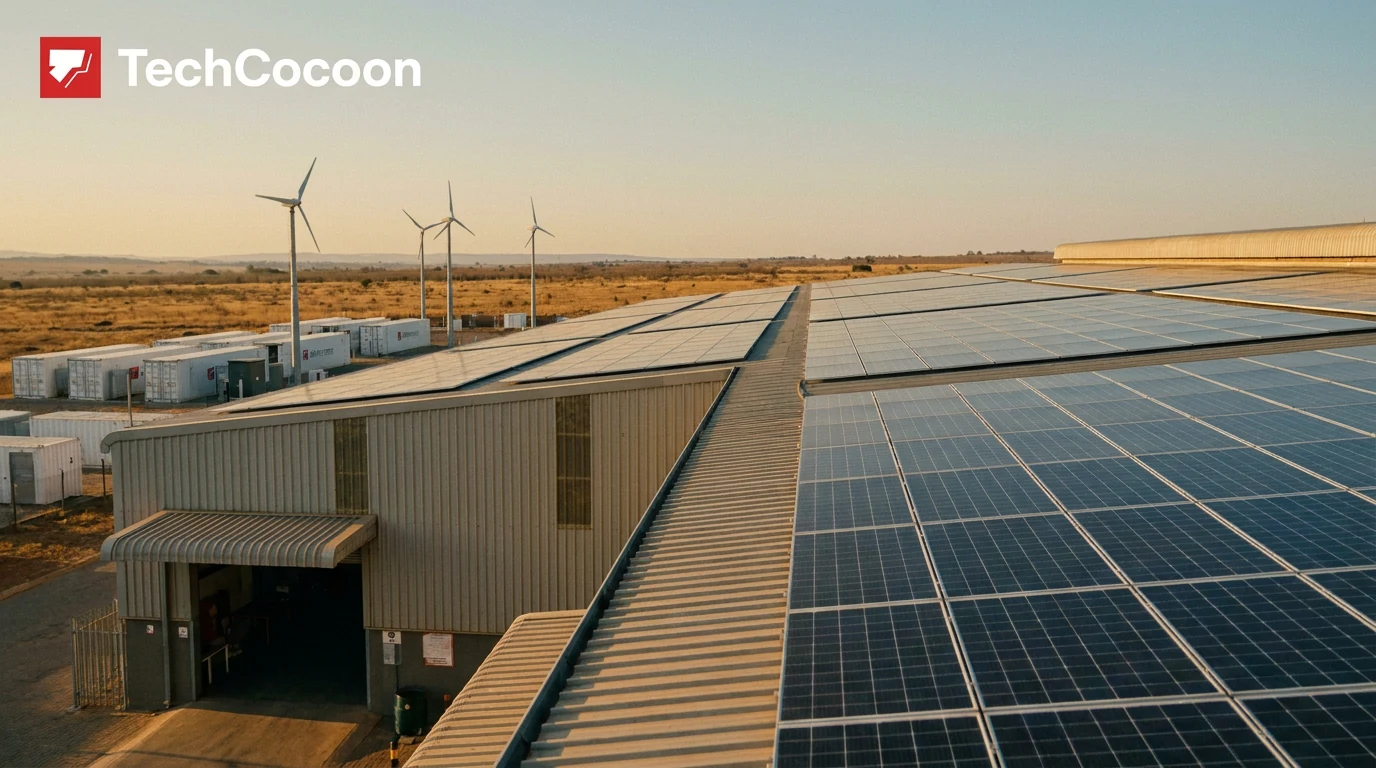
The first answer serves businesses and is often called commercial and industrial, or C&I, energy. Here, a developer designs, finances, builds and operates a solar-and-battery system on a client’s site, then sells the electricity through a long-term purchase agreement. The business pays nothing upfront and simply buys cleaner, often cheaper power; the developer carries the capital cost and earns it back over years. Companies pursuing this model have drawn steady institutional backing precisely because those long contracts produce predictable, bankable cash flows, CrossBoundary Energy, for instance, recently secured $40 million to expand exactly this kind of portfolio across the continent.
The second answer serves households and small businesses and is called pay-as-you-go, or PAYG. A customer takes a small solar home system or appliance and pays for it in tiny instalments, often by mobile money, unlocking the device as they go. Miss a payment and the system pauses; complete the payments and you own it. Pioneered by companies like M-KOPA and Sun King, PAYG turned solar from an unaffordable purchase into a manageable utility bill, and in doing so built large customer bases and rich repayment data.
Why the financing is the innovation
Notice that in both models the breakthrough is not the solar technology, which is globally standard, but the financing. C&I shifts the upfront cost onto a developer with patient capital; PAYG spreads it into micro-payments. Each one decouples the benefit of power from the burden of paying for it all at once, which is the only way these markets open up. That is also why these businesses look as much like lenders as like energy companies, and why their biggest risk is credit: a PAYG book or a C&I portfolio is only as healthy as its customers’ ability to keep paying.
The hard parts
The challenges are real. Both models are capital-intensive and depend on access to cheap, long-term financing, which is scarce and expensive in African markets. Currency risk bites hard when equipment is bought in dollars and revenue is earned in local currency. And the customers most in need are often the least able to pay reliably, which keeps default risk ever-present.
Why it matters
This quiet, distributed build-out is reshaping how power reaches the continent. Rather than waiting for national grids to expand and stabilise, a generation of companies is delivering reliable electricity directly to the businesses and homes that need it, financed in ways that fit how people actually earn and spend. It will not replace the grid, and it does not solve everything. But it is a rare example of infrastructure being built from the bottom up, one rooftop and one payment at a time, and it is steadily making clean, dependable power a practical reality for people the grid has long failed.