
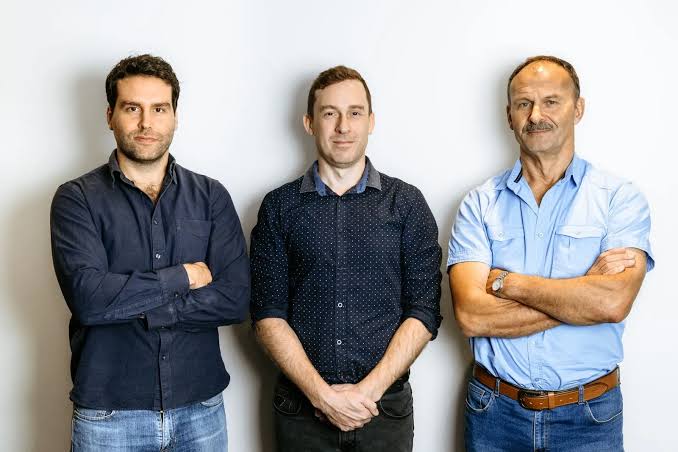
Cape Town-based AI Diagnostics has raised 85 million rand, about $5.2 million, to scale a tool that screens for tuberculosis without an X-ray or a specialist. The pre-Series A round was led by The Steele Foundation for Hope, with iFSP Group and the Global Innovation Fund, alongside existing backers Africa Health Ventures and Savant.
A stethoscope, reimagined
Founded in 2020, the company has rebuilt a 200-year-old instrument around artificial intelligence. Its flagship product pairs the Ostium digital stethoscope with an AI model, AI.TB, that analyses lung sounds in real time and flags patterns linked to tuberculosis. A frontline health worker can run the screen at a clinic, pharmacy or community centre, then refer flagged patients for confirmatory testing. The device has regulatory approval from South Africa’s health products authority and has screened more than a thousand patients locally, with clinical research running in over ten countries.
Why it matters for TB
The unmet need is enormous. Tuberculosis remains one of the world’s deadliest infectious diseases, and the detection gap is widest exactly where X-ray machines and radiologists are scarce. The problem is sharper still because so much TB is silent: data cited from the 2025 World TB Report found 58 percent of TB-positive people in South Africa reported no symptoms. Symptom-based screening misses them. An affordable acoustic test that any health worker can administer changes what the company’s chief executive Braden van Breda calls the geography of screening, moving it out of hospitals and into the places people actually go.
The road ahead
The capital will fund clinical validation, further development of the AI model, and expansion across sub-Saharan Africa and into Asia. The harder work is regulatory and clinical: a screening tool lives or dies on the accuracy of its referrals, and scaling a medical device across health systems is slow, evidence-heavy work.
Still, the round points to something useful for African healthtech. The most valuable products in the sector are not consumer apps but tools that let strained public-health systems do more with less. If AI Diagnostics can prove its accuracy at scale, it offers a template for AI that meets frontline care where it is, rather than where it should be.