
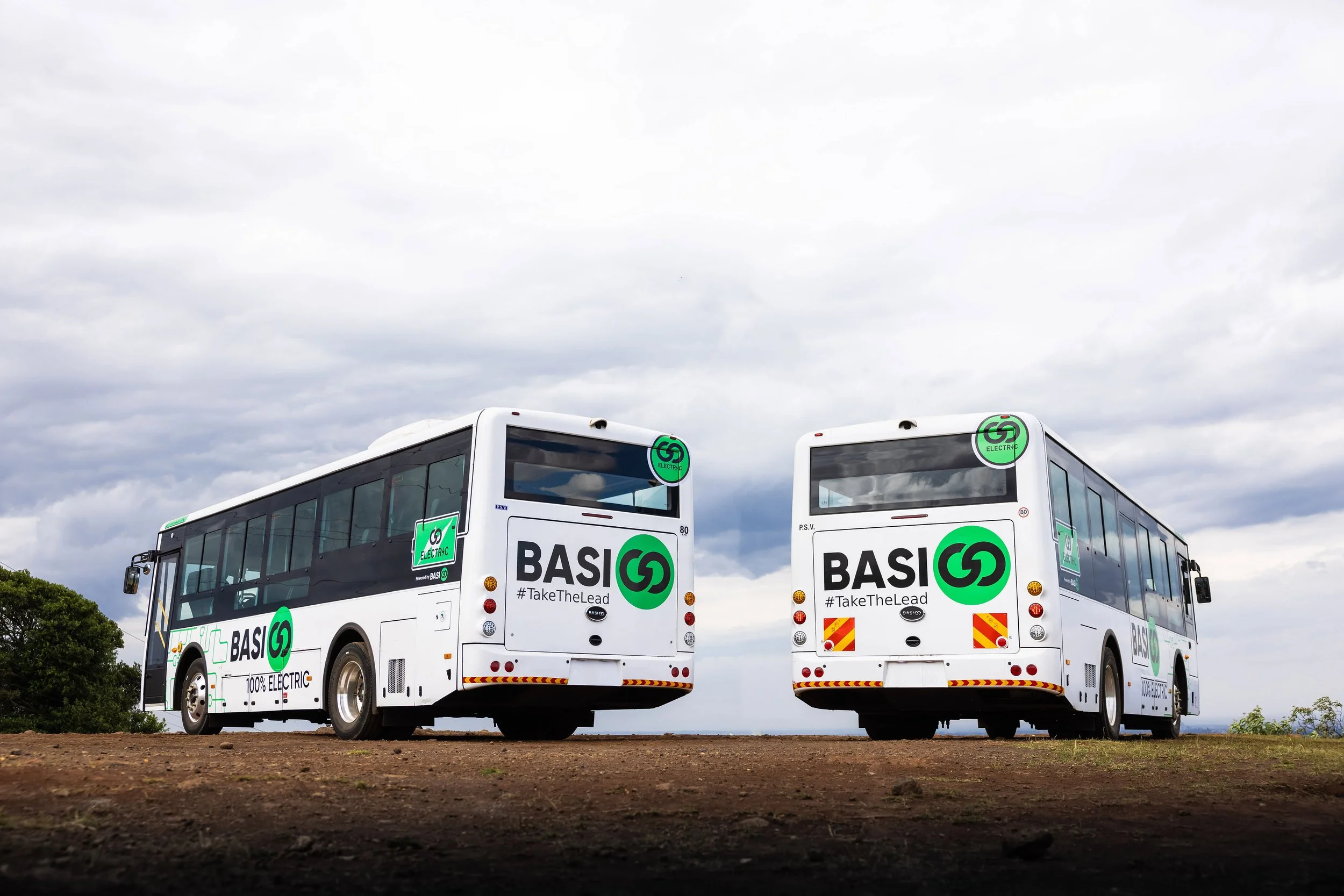

BasiGo’s Rwanda fleet has moved beyond a small city pilot, but the more important industrial question is where the buses, batteries and service capability will come from as the market grows.
The company expanded into Rwanda after first building its electric-bus model in Kenya. Its Rwanda operation combines electric buses with charging and a Pay-As-You-Drive lease model for private bus operators. In 2026, BasiGo added intercity vehicles capable of serving long-distance routes beyond Kigali.
That growth puts a familiar African industrial choice on the table: import complete vehicles indefinitely, or localise more assembly and technical work inside the region.
Electric buses need more than a dealership
A diesel bus can be purchased from a global manufacturer and serviced through a mature network of mechanics and spare-parts distributors.
Electric buses require a different support system. Operators need reliable charging, battery diagnostics, high-voltage technicians and software that can monitor vehicle performance. If those capabilities remain overseas, downtime can become expensive.
BasiGo’s model addresses that by operating more of the infrastructure around the bus. Africa50, one of its investors, describes the company as an EV distribution and financing platform that also provides charging, maintenance and fleet management in Kenya and Rwanda.
That service layer is as important as where the chassis is assembled.
Regional assembly changes the economics
BasiGo has developed local assembly capability in Kenya and has said regional manufacturing is part of its scale strategy. Proparco described the company in 2025 as locally assembling electric buses while developing charging infrastructure for East African operators.
Rwanda has stronger ambitions around local vehicle assembly too. Government policy offers incentives for domestic manufacturing, and recent public discussion has linked EV charging expansion with attracting more private investment in assembly.
The practical path may be regional rather than national. East African markets individually may not yet have enough electric-bus volume to support a full supply chain in every country. A factory or assembly line serving several markets can spread fixed costs across a larger demand base.
That approach still depends on imported components, especially batteries and specialised electronics. Local assembly should therefore be judged by how much technical capability and employment it creates, not by whether every part is manufactured domestically.
Rwanda is becoming a useful demand test
BasiGo’s 2026 intercity rollout expanded the use case beyond urban routes. The company says its R10 and intercity products are designed for Rwanda’s terrain and that operators can use its lease model instead of carrying the full battery cost upfront.
Longer routes put more pressure on charging placement, range planning and battery reliability. They also create stronger evidence about whether electric buses can compete economically with diesel outside a dense city network.
If operators can run those routes profitably, demand for buses and service infrastructure should become more predictable. Predictable demand is what makes deeper local assembly easier to justify.
Why it matters
African EV policy often focuses on import taxes and consumer adoption. Public transport offers a different route to scale.
A bus runs many kilometres, carries many passengers and uses fuel intensively. Replacing one diesel bus can therefore create more concentrated demand for charging and maintenance than replacing one private car.
BasiGo’s expansion shows how that demand can support a regional industrial base around assembly, battery service, charging and fleet software.
The goal should not be symbolic local content. It should be a supply chain that lowers downtime, creates skilled jobs and reduces the cost of deploying the next hundred buses.
What to watch
Watch where BasiGo’s next batches for Rwanda are assembled and how much maintenance and battery work is handled locally. Those details will show whether value is moving into the region or whether deployment remains mostly an import-and-operate model.
Charging infrastructure outside Kigali is another key indicator. Intercity routes only scale when depots and corridor charging are reliable.
The strongest version of East Africa’s electric-bus story will not be that the region buys more EVs. It will be that the region learns to build, finance and maintain the systems around them.