
The headline numbers look like a comeback. African startups crossed $1.3 billion in disclosed funding by early June 2026, with June opening on a $215 million mega-deal. But beneath the recovery sits a structural change that matters more than the totals: the kind of money flowing in has shifted, and with it, the kind of company that gets built.
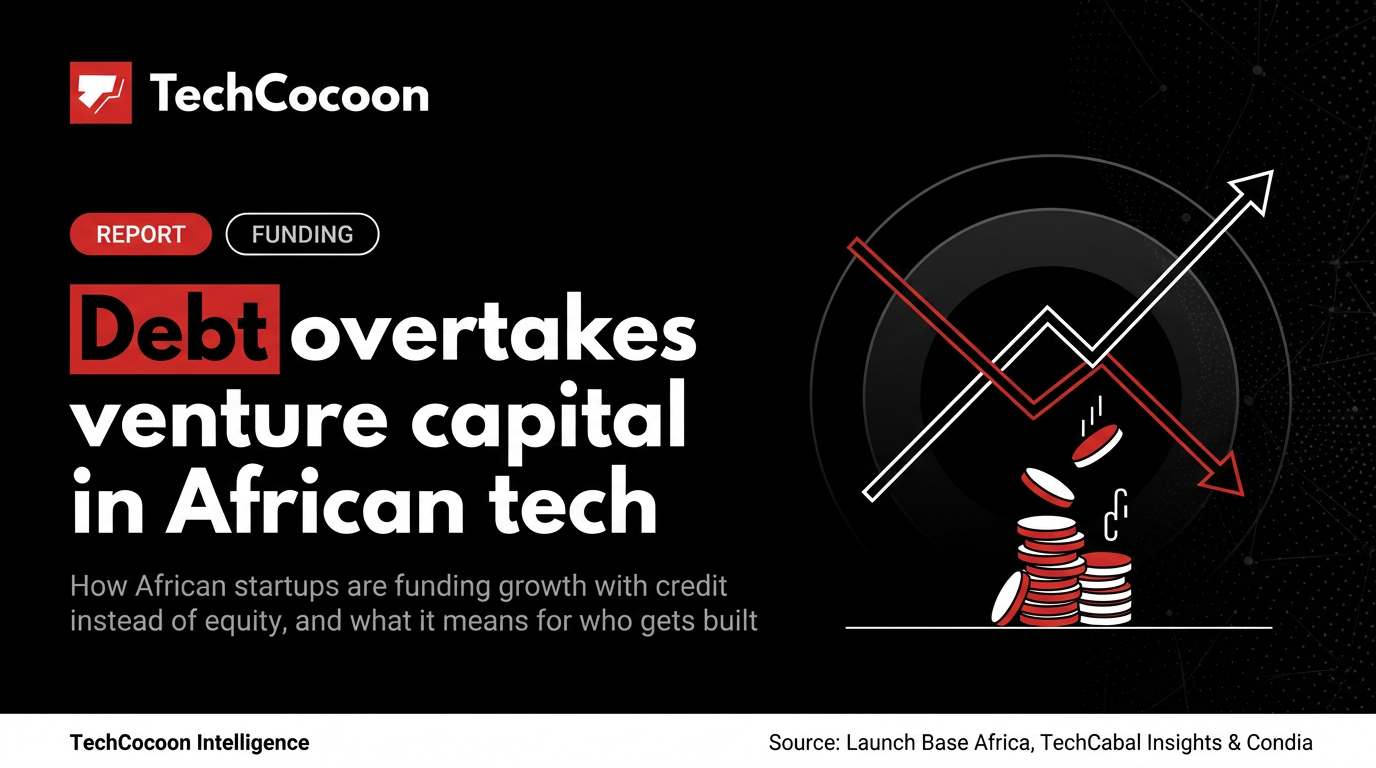
Debt has overtaken equity
The clearest signal is in the instruments. By one analysis, debt accounted for roughly 77% of all capital raised in May 2026, not a one-off but an accelerating trend. Tanzania’s Nala drew a credit facility rather than equity; Nigeria’s Sycamore issued commercial paper. For asset-heavy and high-volume businesses, debt funds growth without diluting founders, and it is a sign these companies are now mature enough to be underwritten like real operating businesses.
Three themes reshaping the map
The same analysis identifies a few forces converging at once. Electric mobility is absorbing large cheques, from Spiro’s headline raise to Dodai in Ethiopia and others scaling fleets on debt. Crypto-native capital has arrived, with stablecoin issuers backing African payment infrastructure directly, bringing liquidity to cross-border payments while introducing regulatory uncertainty that, as one Lagos technology lawyer put it, leaves the rules still being written. And development finance institutions, once active early-equity co-investors, have pivoted sharply toward senior debt.
What it means for founders
This is a more disciplined market, and in some ways a healthier one. But the shift has a cost. Debt rewards companies with revenue, collateral or predictable cash flows, infrastructure, mobility, lending. It does almost nothing for the unproven, pre-revenue founder with only an idea, and that is precisely the stage where early equity has thinned most. The risk is an ecosystem that funds scaling well and experimentation poorly.
For founders, the practical lesson is to know which kind of capital fits the business, and to stop treating venture equity as the default. For the continent, the deeper question is whether the pipeline of early, risky bets stays full enough to produce the scale-ups that tomorrow’s debt will finance. The money is back. Whether it reaches the next generation of founders, not just this one’s balance sheets, is the story to watch.