
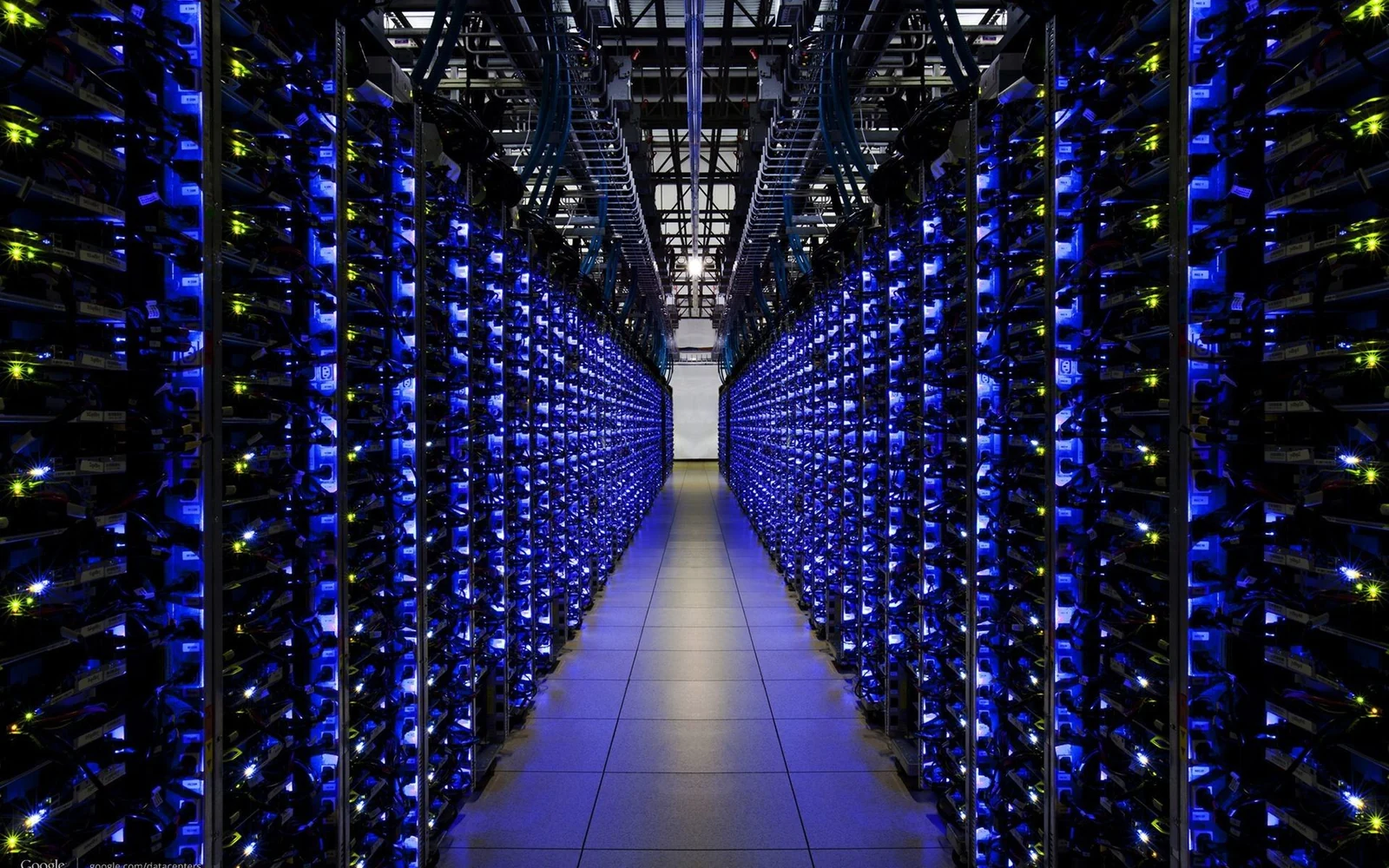

For all the talk of African tech, a quiet dependency sits underneath it: much of the continent’s data is stored, and most of its heavy computing happens, on servers located somewhere else, often in Europe. A building boom is now trying to change that, with data centres going up across the continent at a pace that reflects two powerful new pressures. This is a look at the scramble and why it matters more than it sounds.
Two forces driving the boom
The first is artificial intelligence. Training and running AI models demands enormous, specialised computing power, and that compute has to live in physical buildings full of servers. As African governments and companies move to adopt AI, the absence of local capacity becomes a strategic gap. The most striking signal of intent came when Cassava Technologies and Nvidia announced plans for an AI factory in South Africa, an effort to put advanced AI computing on African soil rather than renting it abroad.
The second is data sovereignty. A growing number of African countries have passed data-protection laws requiring that certain categories of citizen and government data be stored within national borders. That regulatory shift, combined with the simple performance benefit of keeping data physically close to users, turns local data centres from a nice-to-have into a legal and commercial necessity.
Who is building
The result is a crowded field. Established regional operators have spent years building large, carrier-neutral facilities, particularly in South Africa, which remains the continent’s data-centre heartland, and increasingly in hubs like Lagos, Nairobi and Accra. Specialist developers are pushing into markets that were long overlooked. Global cloud giants have opened or announced African regions, and chip and infrastructure players are partnering with local firms to bring AI-grade capacity online. The pattern is consistent: a mix of homegrown operators, international hyperscalers and strategic partnerships, all racing to claim a position before demand fully arrives.
The power problem
Here lies the catch, and it is a big one. Data centres are voracious consumers of electricity, and they need it to be reliable and uninterrupted. That collides head-on with one of the continent’s defining constraints: unreliable, insufficient power. Building a world-class data centre in a region prone to outages means building, or buying, dedicated, resilient power alongside it, which is exactly why the data-centre boom is so tightly linked to the parallel boom in solar, storage and independent power. You cannot build Africa’s digital infrastructure without first solving its energy infrastructure.
Cost and capital are the other constraints. Data centres are enormously expensive, long-horizon investments, and financing them in markets with currency and political risk is hard. That tends to favour large, well-capitalised players, which raises a familiar question about who ends up owning a strategic national asset.
Why it matters
The stakes go well beyond storage. Where a country’s data lives, and where its AI runs, increasingly determines its digital autonomy. An Africa that hosts its own data and compute captures more of the economic value, keeps sensitive information under its own jurisdiction, and is less dependent on infrastructure it does not control. An Africa that does not remains a customer of other regions’ clouds, exporting both its data and the value built on it.
The data-centre scramble is, in that sense, a contest over digital sovereignty dressed up as a real-estate boom. It will be shaped as much by who solves the power problem as by who pours the concrete, and its outcome will quietly determine how much of the AI era the continent actually owns.