
Spiro, one of Africa’s largest electric-mobility operators, has raised $215 million in equity, money it will use to extend its battery-swapping network, expand manufacturing and push into new markets. The round is backed by Impact Fund Denmark, Denmark’s development finance institution, and Equitane, the investment platform founded by Spiro chairman Gagan Gupta, who told Bloomberg the company is approaching a $1 billion valuation.
The number is large, but the more telling detail is who wrote the cheque. A European development institution channelling Danish pension capital into African electric two-wheeler infrastructure is not an early-stage gamble. It is a signal that the model has crossed from pilot into something investors are willing to treat as durable infrastructure.
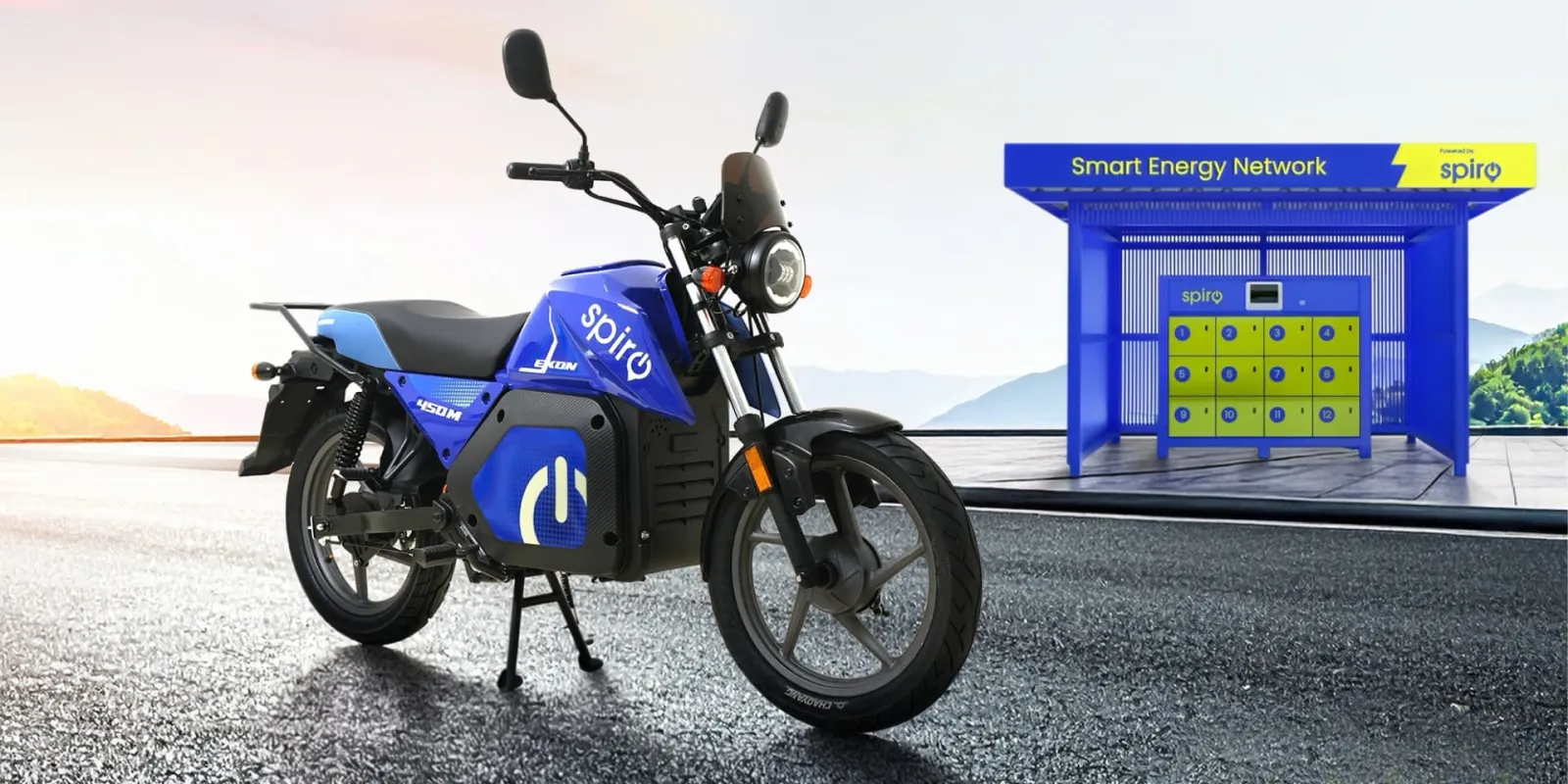
Spiro is not starting from zero. The company operates across seven markets, Kenya, Rwanda, Uganda, Togo, Benin, Nigeria and Cameroon, with roughly 100,000 electric motorcycles, more than 2,500 swap stations and over 30 million battery swaps completed. It runs assembly plants in Kenya, Rwanda and Uganda and a battery-recycling facility in Nigeria, and reports about 6,000 people working directly and indirectly across its operations.
Why swapping, not charging
The economics sit underneath everyday work. Across much of the continent, motorcycle taxis, boda-bodas in East Africa, okadas in Nigeria, zemidjans in Benin, are not a lifestyle choice but an income engine for millions of riders and delivery workers. For them, downtime is lost earnings, and a bike that needs hours to recharge is a non-starter.
Battery swapping answers that directly. Instead of waiting at a charger, a rider trades a depleted battery for a charged one in minutes and gets back on the road. Spiro reports that riders using its motorcycles cut daily transport costs by up to 40%, about $2 a day against petrol bikes, meaningful money in markets where fuel prices squeeze household budgets. A lifecycle assessment of its Kenya operations found its motorcycles produced roughly 72% lower emissions than petrol alternatives.
An energy network wearing two wheels
Read closely, Spiro is building less a motorcycle company than a distributed energy system. Each swap station is a node; the network of charged batteries is effectively a continent-spanning storage layer that happens to move people and parcels. That framing is why the funding matters beyond the fleet count. The company is positioning the swap network as connective infrastructure, the kind of asset that, once embedded in how a city moves money and goods, becomes very hard to dislodge.
The market behind that bet is expanding. Industry estimates put the African electric two-wheeler market on a path from about $441 million in 2023 to more than $2.6 billion by 2031, and in Kenya electric models have climbed to a double-digit share of new motorcycle registrations within a few years. Africa has an estimated 25 million motorcycles against India’s 320 million, a gap Spiro reads as headroom rather than a ceiling.
The harder test
Scale of this kind is capital-hungry, and that is the risk. Battery-swap networks only work at density; a half-built grid of stations is a half-useful product. This raise follows a $100 million round in October 2025 led by Afreximbank’s FEDA and a $50 million debt facility in February 2026, a pattern of large, repeated injections that buys expansion but also raises the bar on returns. Reported figures for Spiro’s total funding since 2022 vary across sources, which is itself a reminder to read scale claims carefully.
There is geographic concentration too. Much of the demonstrated demand sits in East Africa, while expansion into new markets, with Ethiopia named consistently across reports, will test whether the model travels into different regulatory and energy environments. And Spiro is not alone: a competitive field of battery-swap and electric two-wheeler operators is forming across the continent, which keeps pricing and station economics under pressure.
What it signals for Africa’s tech and energy story
The deeper question this round surfaces is ownership. If swap networks become the rails for urban mobility and a slice of distributed energy storage, then whoever builds them early holds a strategically important position, shaping pricing, data on movement and demand, and the pace of the petrol-to-electric transition itself. Right now, that layer is being laid largely by private operators and foreign development capital.
For African regulators and energy ministries, that is the part worth watching. The electric-mobility shift is no longer a question of whether; the question is whether the public sector helps shape the infrastructure that results, or finds it already built and owned by the time the policy catches up.