
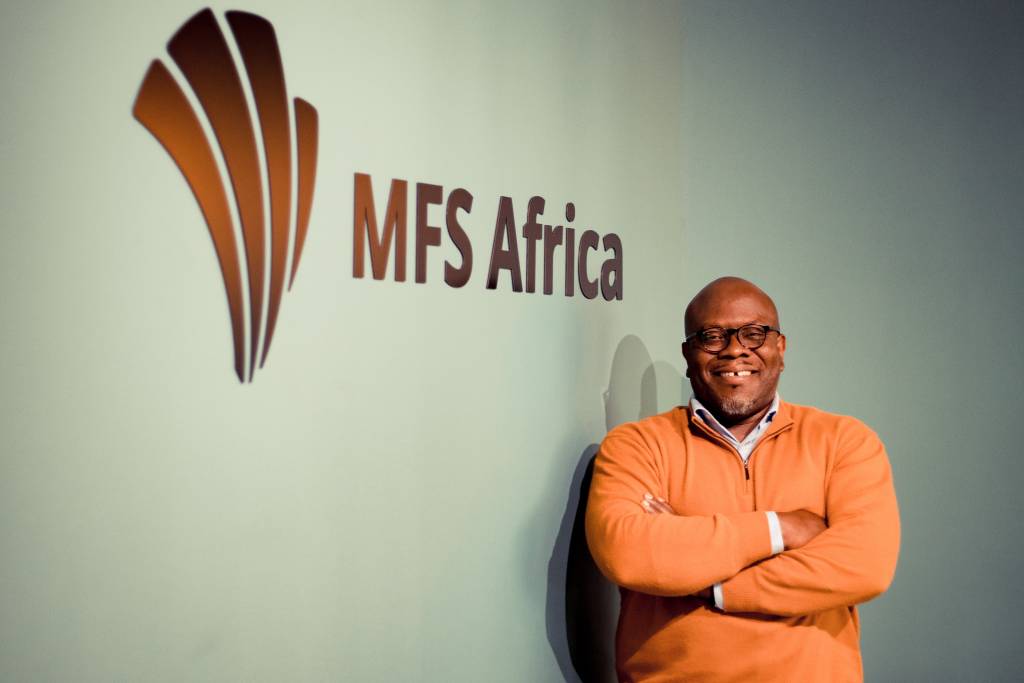

MFS Africa changed its name to Onafriq, but the infrastructure problem it was built to solve is still visible: African money moves through banking and mobile-money systems that do not naturally behave like one network.
In February, Onafriq and the Pan-African Payment and Settlement System launched a CBN-approved Nigeria-to-Ghana outbound payments pilot. The service is designed to let value move from Nigeria to Ghana in naira, connecting participating banks and mobile money operators without requiring the customer to manage a hard-currency conversion.
The announcement is easy to read as another cross-border payment launch. Its real importance is architectural. It shows how many institutions have to cooperate before an apparently simple regional transfer can feel local at both ends.
The hard part is interoperability
Africa already has banks, mobile wallets, payment switches and regional settlement initiatives. The problem is that each network has its own rules, interfaces and coverage.
A user in one country should not have to understand those boundaries. The payment system has to translate between them.
That is where Onafriq’s network and PAPSS serve different functions. Onafriq connects payment endpoints, including mobile-money ecosystems. PAPSS provides a framework for cross-border settlement in African currencies.
The Nigeria-Ghana pilot combines those layers with regulated local institutions. The result is not a new consumer wallet competing for attention. It is an attempt to make existing wallets and bank accounts work across a border more naturally.
Local-currency settlement matters for merchants
Cross-border payments in Africa often become more expensive when transactions have to pass through a third currency.
A Nigerian business paying a Ghanaian supplier may face conversion spreads, correspondent banking fees and settlement delays before value reaches the other side. Those costs are especially painful for smaller merchants operating on thin margins.
The pilot aims to keep the customer-facing transaction in local currency while the infrastructure handles settlement behind the scenes.
That does not remove foreign-exchange economics. Exchange rates and liquidity still matter. What changes is the user experience and potentially the number of intermediaries involved.
For SMEs trading regionally, that can make formal digital payments more practical than informal workarounds.
Partnerships are the product
Many fintech companies describe partnerships as distribution. For cross-border infrastructure, partnerships are closer to the core product.
A network is useful only if it reaches enough banks, wallets and markets. Every additional regulated participant increases the number of endpoints that can exchange value.
Onafriq has continued to build that network through payment partnerships across the continent, including banks, mobile money operators and global payment companies.
The complexity is that network growth also raises coordination costs. Service levels, compliance standards and reconciliation have to remain consistent across organisations that do not share the same technology stack.
Why it matters
Africa’s cross-border payments opportunity is sometimes framed as a race to create the winning app. The Onafriq model points in another direction.
The durable opportunity may be in making existing financial institutions interoperable enough that users do not care which infrastructure sits behind a transfer.
That is important for regional trade. Businesses are more likely to transact formally when receiving money from a neighbouring country is as predictable as receiving a domestic payment.
It also explains why embedded cross-border finance remains unfinished work. The challenge is not the absence of digital payment products. It is the absence of seamless connectivity between the products people already use.
What to watch
Watch whether the Nigeria-Ghana pilot moves from controlled launch to broader commercial availability, and which banks and mobile money operators join the corridor.
Also watch whether the model expands to additional country pairs under PAPSS. A corridor can prove the technology, but a continental network only becomes powerful when many corridors share common rules.
The old MFS Africa thesis was connectivity. Onafriq’s current partnerships show that the thesis is still relevant, even as the brand and technologies around it evolve.