
The Lagos State government says the city will more than triple its data-centre capacity by 2030. At the launch of Kasi Cloud’s LOS1 facility in Lekki, the state’s innovation commissioner, Olatubosun Alake, said about 146 additional megawatts of data centres are planned, with over 250MW envisaged by 2030, three times today’s base.
Before assessing the ambition, separate the numbers, because they are doing different jobs. Installed capacity in Lagos stands at 78.6MW across more than 20 facilities, with 146.5MW described as pipeline, according to Estate Intel’s development-pipeline research. Installed is real. Pipeline is a mix of construction, announcements and intentions, and in African infrastructure, quietly descoped projects are the norm, not the exception. The 250MW figure is a target, and targets are not capacity.
What is actually being built
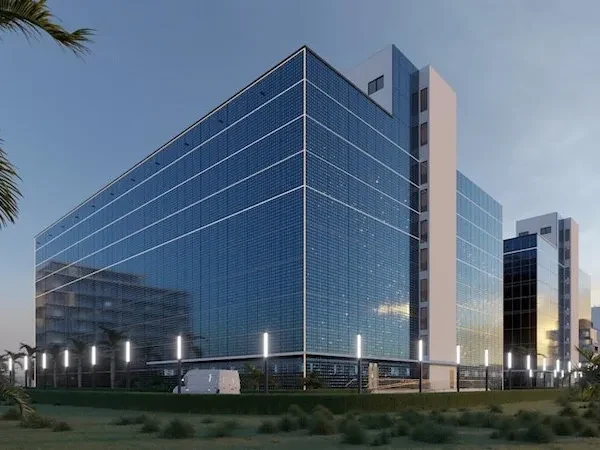
The genuinely concrete part of the story is visible on the ground. Kasi Cloud’s Lekki campus, where the commissioner spoke, broke ground in 2022 on a $250 million site designed for 100MW at full build-out, with Nigeria’s sovereign wealth authority an early investor through an $8 million convertible loan note. Airtel’s Nxtra arm has broken ground on a roughly 35MW facility in Eko Atlantic billed as Nigeria’s largest on completion. Equinix, which entered by acquiring MainOne’s assets, and Open Access Data Centres, whose 24MW Lagos build carries a reported $240 million cost, continue to expand. These are named operators, sites and vendors, the kind of evidence that counts. For context, no operational facility in Nigeria today exceeds 20MW, so a single 100MW campus would change the scale of the market on its own.
The unanswered question is power
Here the announcement runs into physics. Nigeria’s national grid generates between roughly 3,000MW and 4,000MW for the entire country, while data-centre energy costs have surged 64.1% since January 2026 and cooling alone consumes about 40% of operators’ energy costs. A 250MW data-centre ambition in a city sharing a 4,000MW national grid is not impossible, but it is, in effect, a commitment to self-generation: gas, solar and storage built alongside the servers. TechCocoon Intelligence reads any Lagos data-centre announcement that arrives without a power answer, contracted megawatts, generation plans, tariff terms, as a real-estate story wearing infrastructure branding. The operators that have broken ground know this, which is why dedicated substations and on-site generation increasingly feature in their build specifications.
The “AI-ready” label deserves the same scrutiny. Hyperscale AI campuses need dense GPU racks drawing far more power per rack than traditional facilities, which is precisely why the power question, not the demand question, decides which of these projects energise on schedule.
Who benefits
It is worth noticing whose ambition this is. The 250MW figure comes from the state government, flanked at the launch by the federal finance minister framing compute as a sovereignty issue, and the sovereign wealth fund sits on Kasi Cloud’s cap table. The state is not a neutral observer; it is marketing Lagos as a regional digital hub and shaping who profits from that positioning. That does not make the ambition wrong. It does mean the projections should be read as a pitch as much as a plan.
The demand logic, to be fair, is genuine. Lagos holds about three-quarters of Nigeria’s commercial data-centre capacity, sits beside the submarine cable landings, and serves a digital economy whose cloud usage is growing at over 20% a year, with data-localisation rules pulling financial-sector workloads onshore. The question has never been whether Lagos needs more capacity.
The question, the one that will decide whether 2030 finds Lagos at 250MW or at 120MW and a stack of stalled announcements, is who solves power, and on what terms. If operators are allowed to self-generate at scale and sell surplus back, Lagos’s data-centre builders quietly become power companies, and the grid they bypassed becomes their customer. Watch the megawatts contracted, not the megawatts promised.