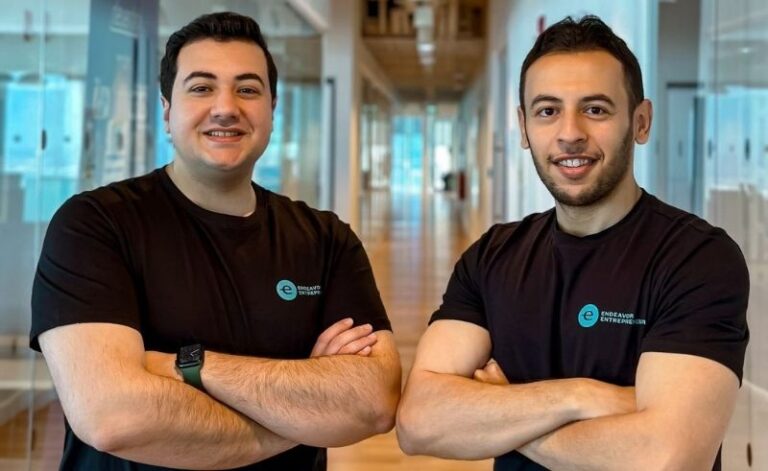
Egypt’s iSchool has acquired software engineering firm Rubikal, a deal that brings a full engineering team in-house as the edtech company tries to build proprietary artificial intelligence systems for schools. The transaction folds Rubikal’s 21 engineers and its founding leadership into iSchool, with Rubikal co-founder Mohamed Ibrahim taking the role of chief technology officer and co-founder Moustafa Badawy becoming vice president of engineering. Financial terms were not disclosed.
The detail that matters is what was bought. iSchool did not acquire a competitor’s student base or a new revenue line. It acquired the capacity to build.
Buying engineers, not users
Founded in 2018 by Muhammad Gawish, Ebrahim Abdullah, Mustafa Abdelmon’em and Osama Ghareb, iSchool began as a platform offering live, gamified coding classes for students aged 6 to 18, covering everything from app and game development to AI. It has since grown into a business with operations across more than 20 countries and a widening base of institutional clients, and it raised $4.5 million in 2024 to fund that expansion.
Rubikal, founded in Egypt in 2016, builds real-time, scalable, fault-tolerant web applications, the kind of unglamorous backend engineering that turns a content business into a software platform. By absorbing that team rather than contracting it, iSchool is making a deliberate choice about where its future value sits.
From content provider to infrastructure
iSchool’s stated aim is to become a full-stack AI infrastructure layer for schools. That phrasing is worth unpacking. For most of edtech’s history, the business was content and delivery: lessons, instructors, a platform to watch them on. The technology underneath was often borrowed, licensed, or assembled from third-party tools.
Owning the engineering changes the economics. A company that controls its own AI stack can build features competitors cannot easily copy, move faster on product, and avoid paying margin to external vendors. It can also sell that infrastructure to other institutions, shifting from a direct-to-student model toward serving schools and corporates as customers. iSchool has been moving in that direction for a while, acquiring SEEDS, the education arm of Egyptian-Saudi software firm Algoriza, in 2025 to expand into Saudi Arabia. The Rubikal deal is the technical complement to that commercial push.
Why edtech is integrating
This is not an isolated move. Across the region, companies that began as service or content platforms are increasingly acquiring or building engineering capacity to control their product stack. The logic is the same one playing out in fintech and commerce: as AI raises the ceiling on what a product can do, the companies that own their technology can integrate it deeply, while those that rent it stay one step behind.
For African and MENA edtech specifically, the timing is sharpened by demand. Governments and parents across the region are pushing AI and coding literacy hard, and institutional buyers, schools, banks, and employers offering training as a benefit, want integrated systems they can deploy at scale, not a patchwork of apps. Whoever can build and control that infrastructure is positioned to win those contracts.
The harder test
Owning engineering talent is not the same as shipping great products with it. The real test for iSchool is integration: how quickly the combined teams align on a roadmap and turn 21 engineers into tools that schools actually adopt. Acquisitions that bring in talent often stall on culture, retention, and the gap between a services mindset and a product one. A CTO appointment signals intent, but execution over the next year will decide whether this was a smart bet or an expensive reorganisation.
There is also the question of focus. A company simultaneously expanding across borders, courting institutional clients, and rebuilding its technical core is carrying a lot at once. Each of those is hard on its own.
What it means
For African edtech, iSchool’s move is a marker of maturity. The sector is moving past the stage where growth meant signing up more students, into one where durable advantage comes from owning the underlying technology. For founders in education, health, and other content-heavy sectors, the lesson is pointed: as AI becomes the product rather than a feature, the build-versus-buy decision on engineering is becoming a strategic one, not an operational one.
And for the wider continent, it is a reminder that the most consequential tech stories are not always the biggest funding rounds. Sometimes they are quieter structural moves, a company deciding it would rather own the machine than rent it.