
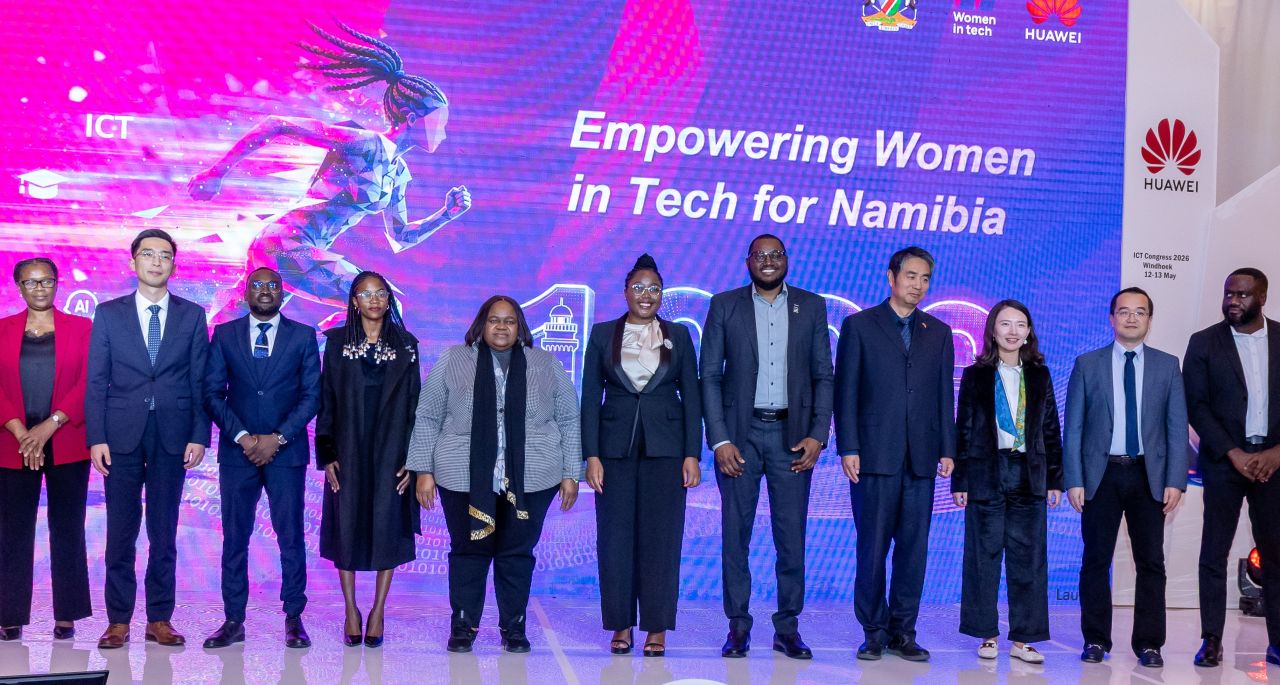

Namibia has launched a Women in Tech and 2026 National Talent Cultivation Project in Windhoek, putting digital skills, inclusion, and youth participation at the centre of the country’s technology agenda.
The launch took place during the Huawei ICT Congress Gala Dinner, where Emma Theofelus, Namibia’s Minister of Information and Communication Technology, said the country cannot wait for perfect conditions before embracing technology. Her message was direct: Namibia must accelerate its digital economy while building the skills and trust needed for people to participate in it.
That distinction matters. Digital transformation is often treated as an infrastructure project. But infrastructure alone does not change a country. People have to trust it, learn it, use it, and build with it.
Digital transformation has a people problem
Many African governments are trying to digitise public services, expand broadband, improve ICT regulation, attract technology partners, and grow digital jobs. Those goals are important, but they can fail if citizens and communities do not see the value.
Namibia’s own digital push is running into that reality.
Theofelus noted that resistance to technology adoption still exists in some communities, especially around digital infrastructure and online services. That is not unusual. Across Africa, digital projects can face suspicion when people do not understand the benefits, fear exclusion, worry about costs, or have seen technology deployed without enough consultation.
This is where skills programmes become more than training exercises.
A Women in Tech initiative can help build confidence, representation, and practical pathways into the digital economy. It can also make technology feel less like something being imposed from above and more like something communities can participate in.
Women cannot remain outside the ICT pipeline
The gender angle is central.
If Namibia wants a stronger digital economy, women cannot remain underrepresented in ICT skills, digital entrepreneurship, technical jobs, and innovation networks. The pipeline has to start earlier and become more visible.
The Women in Tech and National Talent Cultivation Project is designed to strengthen Namibia’s digital workforce and broaden participation in the country’s technology sector, with particular attention to opportunities for young people and women.
That matters because talent gaps do not correct themselves.
If young women do not see technology careers as accessible, the sector loses potential developers, data analysts, cybersecurity professionals, product managers, entrepreneurs, researchers, digital creatives, and policy leaders.
Representation is not only a fairness issue. It is a capacity issue.
A country cannot build a broad digital economy with a narrow talent base.
Public-private collaboration is doing the work
The launch also points to the role of private-sector partnerships in African digital skills development.
Huawei’s involvement is part of a wider pattern across the continent, where global technology companies support ICT academies, training programmes, competitions, equipment donations, and talent pipelines. These partnerships can be useful when they build real skills and connect young people to practical opportunities.
But they should be judged carefully.
A good public-private skills programme should do more than produce event photos. It should improve learning outcomes, give participants practical exposure, create mentorship pathways, connect trainees to jobs or entrepreneurship, and strengthen local institutions.
That is the standard Namibia should apply.
Theofelus’ call for stronger collaboration between government and the private sector is therefore important. Digital transformation is too large for government alone, but it is also too important to be left entirely to corporate goodwill.
The best partnerships have clear roles, measurable outcomes, and public value.
Talent cultivation is economic infrastructure
Talent is often discussed after cables, towers, devices, and data centres. It should be discussed alongside them.
A country can invest in broadband and still struggle if schools lack digital teachers. It can digitise services and still fail if citizens lack digital confidence. It can attract technology partners and still miss the opportunity if local workers do not have the skills to participate.
That is why the phrase “talent cultivation” matters.
It suggests a longer view. Digital skills are not built in a single workshop. They require exposure, practice, mentorship, projects, competitions, internships, and a labour market that can absorb trained young people.
For Namibia, the opportunity is to turn skills programmes into a serious workforce strategy.
That means linking training to schools, universities, technical colleges, startups, public service, telecom operators, banks, creative industries, cybersecurity firms, and regional digital employers.
The inclusion question is practical
Digital inclusion is often used as a polite phrase. In practice, it decides who benefits from the next economy.
If women, rural communities, low-income youth, and underrepresented groups are not deliberately included, digital transformation can deepen existing inequality. The people already close to opportunity become more productive, while everyone else is asked to “adapt” without enough support.
Namibia’s Women in Tech push is useful because it names inclusion early.
But the harder work comes after the launch.
Who gets trained?
What skills are taught?
Are rural girls included?
Are there mentors?
Are there internships?
Do employers participate?
Can participants build real projects?
Will the programme track outcomes beyond attendance?
These questions decide whether the initiative becomes a serious talent pipeline or another well-branded skills event.
Why this matters beyond Namibia
Namibia is not the only African country trying to build digital capacity while managing public hesitation around technology.
Across the continent, governments are pushing digital ID systems, e-government portals, online payments, school ICT programmes, AI strategies, cybersecurity policies, and startup support. The infrastructure conversation is moving quickly. The social adoption conversation is moving more slowly.
That gap can become a problem.
Digital transformation requires consent, trust, literacy, and participation. If citizens feel excluded or confused, even useful systems can face resistance. If young people are trained only as users, not builders, countries remain dependent on imported platforms and skills.
Namibia’s Women in Tech and talent cultivation push should be read in that wider context.
It is a reminder that digital transformation is not only about what governments deploy. It is about who is prepared to participate.
The harder test ahead
The launch in Windhoek is a useful signal, but the next phase matters more.
Namibia will need to show whether the Women in Tech and National Talent Cultivation Project can move beyond visibility into measurable outcomes: more young women trained, more ICT projects built, more mentorship opportunities, more entry into digital jobs, and stronger participation in the country’s technology sector.
Theofelus is right that Namibia cannot afford to wait for ideal conditions before embracing technology. But moving quickly does not mean moving carelessly.
The country’s digital future will depend on whether infrastructure, skills, trust, and inclusion grow together.
For African tech, that is the larger lesson.
Digital transformation is not complete when a country connects more people. It becomes meaningful when those people have the confidence and capacity to shape what comes next.