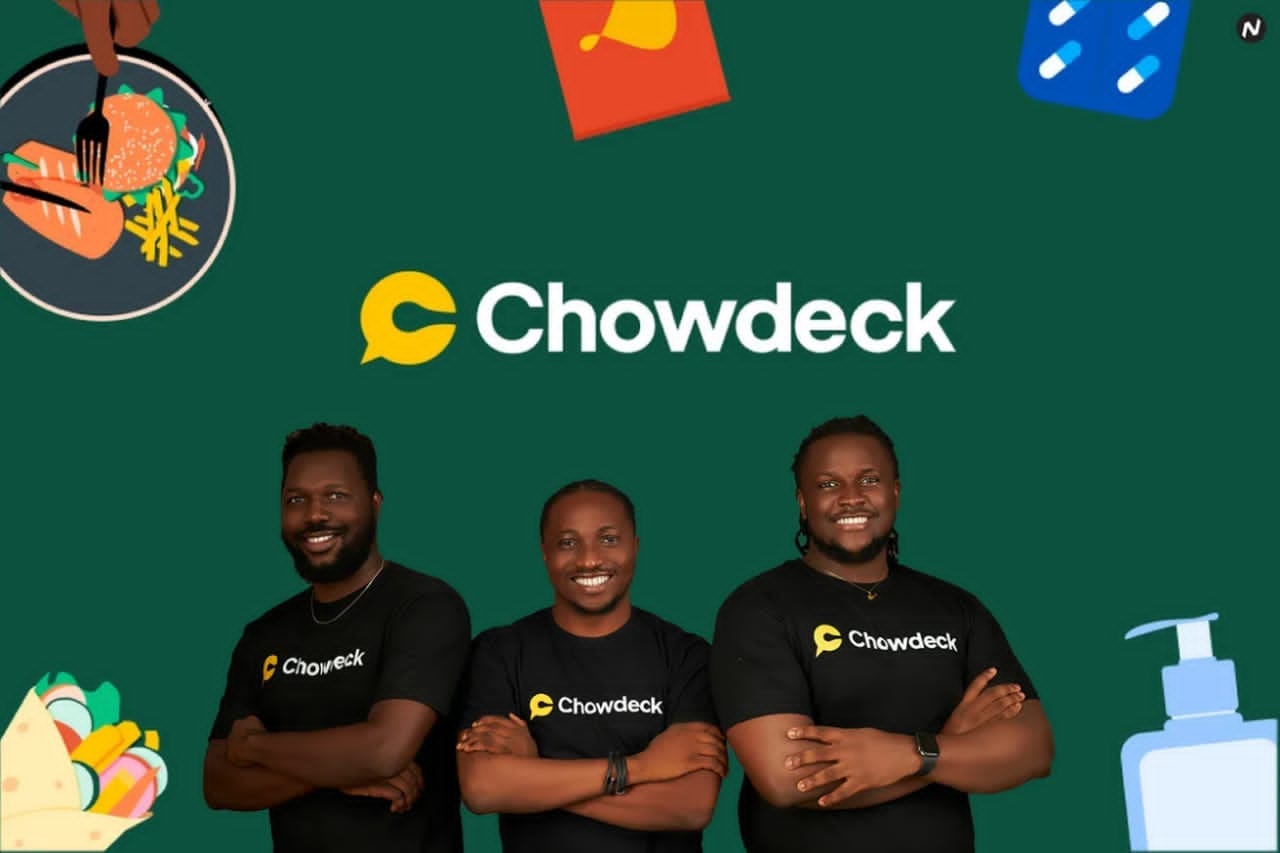

The app Nigerians open when they do not want to cook is becoming the app they open instead of going to the supermarket. Chowdeck delivered more than ₦1.5 billion worth of groceries in June alone, a single-month record for the Nigerian delivery company, with groceries now contributing 11% of its overall business, according to co-founder and chief executive Femi Aluko, who announced the milestone on July 1 and described the category as a “small bet” that keeps growing.
From food to everything
The number lands because of what it took to reach it. When Chowdeck raised $9 million in its Series A in August 2025, led by Novastar Ventures and Y Combinator, expanding groceries was explicitly on the roadmap, backed by a plan to build a network of dark stores, small warehouses stocked purely for fast fulfilment, targeting 40 by the end of 2025 and 500 by the end of 2026. A ₦1.5 billion grocery month suggests that infrastructure is starting to deliver on the reason it was built.
Why groceries change the maths
Groceries and restaurant meals serve different customer needs but the same platform need: frequency. A customer who orders lunch during the week and also buys tomatoes, eggs and cooking oil through the same app on Saturday opens it more often and spends more each month, which is the entire logic of quick commerce. Aluko was candid that the category is harder than food, citing out-of-stock items and fulfilment timing among the ways it has stretched operations. Groceries carry lower margins, perishables and stricter freshness expectations, which is exactly why 11% of business in a young category is worth taking seriously.
The wider Chowdeck engine
The milestone sits on top of a platform that has kept compounding. Chowdeck has crossed 2 million registered users, a year after hitting 1 million, passed 1 million cumulative orders, and grew daily volumes from roughly 30,000 to more than 40,000 in the months that followed. It operates in 11 cities across Nigeria and Ghana with a network of over 20,000 riders. Most distinctively in a market where Jumia Food, Bolt Food and Glovo all retreated, it has stayed profitable while expanding, and it built its supply network around local restaurants and vendors rather than international chains, a base that is harder for rivals to copy.
What builders should take from it
Chowdeck’s grocery run is a clean lesson in sequencing: win a beachhead category, build the logistics muscle and customer habit there, then point the same infrastructure at a bigger, harder market. The dark-store build-out shows the follow-through, spending the raise on capacity before demanding the demand. Aluko says the company aims to serve far more customers in Q3 and teased that “something big is coming.” Given how the last small bet turned out, that is worth watching.