
In February 2026, a South African studio shipped a game in which players pull off heists to reclaim looted African artifacts from Western museums. Relooted, developed by Nyamakop, launched on Windows and Xbox Series X/S with an African-futurist premise and a point to make about whose history gets told. It is a useful symbol of where African gaming is: small, scrappy, increasingly ambitious, and finally telling its own stories. This is a look at the state of play.
The shape of the market
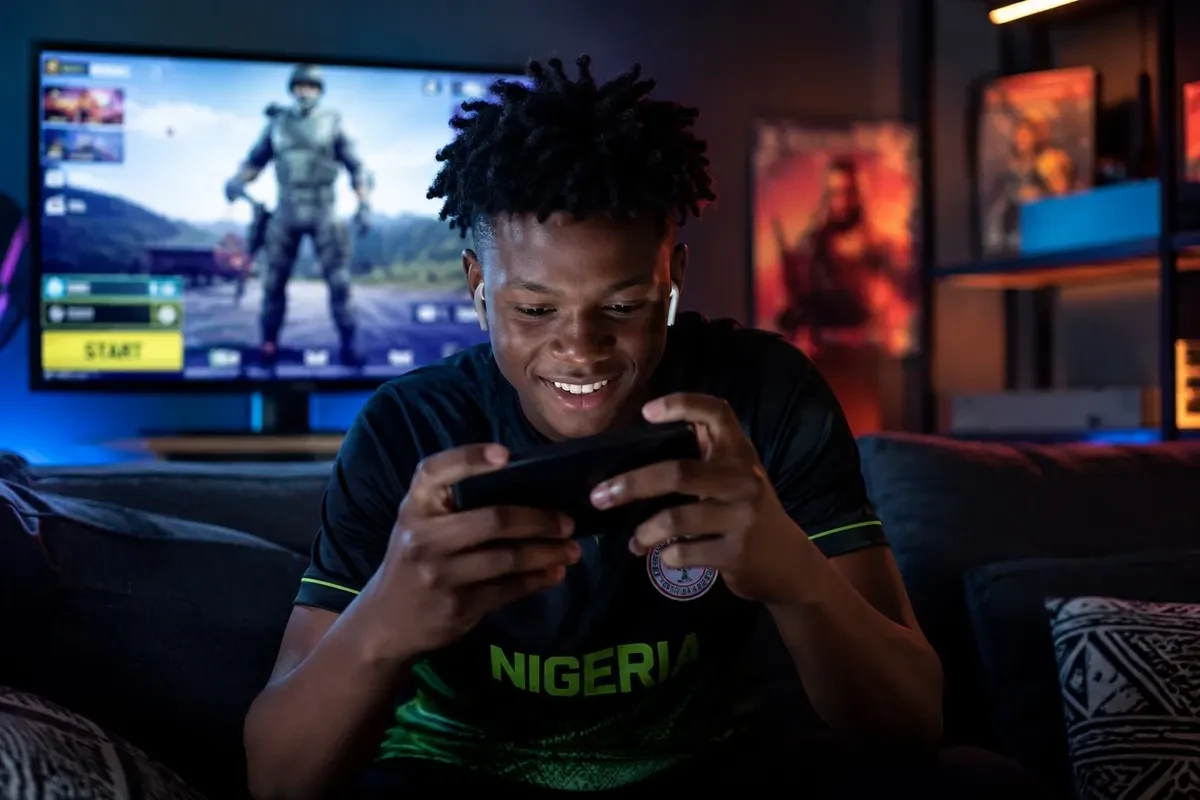
African gaming is, first and foremost, a mobile story. The console and high-end PC markets that dominate elsewhere are thin on a continent where the smartphone is the primary, often only, computing device. That shapes everything: the games that scale are mobile, free-to-play and data-light, and the companies that matter are the ones who understand distribution to first-generation smartphone users.
The numbers point up. A young, fast-growing, increasingly connected population is exactly the demographic the global games industry covets, and as more Africans come online, the addressable audience keeps expanding. Competitive gaming is formalising too, with seventeen African federations now part of the Global Esports Federation and betting-adjacent operators pushing into esports.
The players
A handful of companies define the landscape. The most prominent, South Africa’s Carry1st, built its business less on making games than on solving the two hardest problems around them: distribution and payment, the latter through an embedded fintech layer that lets African players actually pay for games despite patchy card penetration. On the creative side, studios like Nyamakop, Cameroon’s Kiro’o Games, Ethiopia’s Qene Games and others are building original titles with global appeal, steadily dismantling the lazy assumption that the continent lacks world-class developers.
That assumption has been one of the biggest obstacles. Founders in the space describe spending real energy correcting investors and international peers who arrive expecting little, a tax on attention that studios elsewhere never pay.
The hard parts
The challenges are structural. Payment friction has long been the single biggest barrier, which is why a games company ended up building a fintech product to get around it. Monetisation is hard in markets where disposable income is low and players are price-sensitive, so revenue per user runs well below global benchmarks. Funding is scarce: gaming has never been a favourite of African venture, which has poured most of its money into fintech, and global gaming investors have only occasionally looked the continent’s way. And talent, while real and growing, still lacks the deep local pipelines of established games hubs.
There is also the pull of the global market. Many of the most promising studios aim their best work at international players, which is commercially sensible but means some of the continent’s gaming talent builds for audiences elsewhere rather than at home.
Why it matters
Gaming is easy to dismiss as frivolous next to fintech or energy, but it is one of the few sectors where African companies are exporting culture, not just importing technology. A heist game about looted heritage, a publisher that cracked African mobile payments, a generation of studios telling local stories to global audiences, these are signs of an industry finding its own model rather than copying someone else’s. It is growing slowly, held back by money and infrastructure, but it is growing on its own terms, and that is what makes it worth watching.