

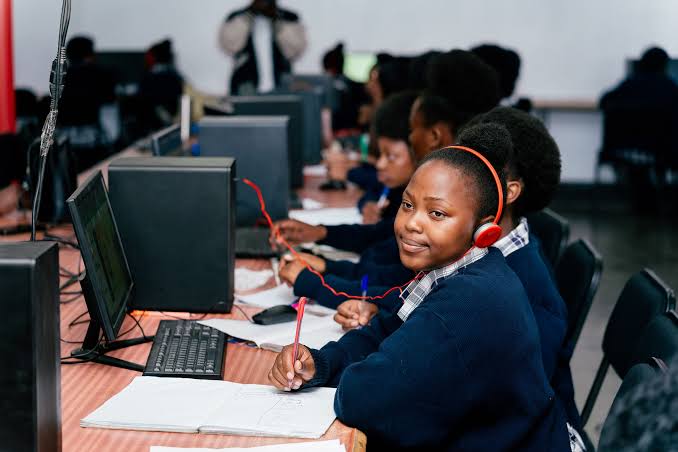
Paratus Zambia has connected 18 Family Legacy schools in Lusaka, giving more than 10,000 learners access to Starlink internet after replacing a network the company described as unstable and prone to outages.
The deployment was completed in about two weeks. Connecting Africa reported on October 19 that conventional options had been constrained by distance from cellular towers and dependence on fixed-line infrastructure.
For schools, that deployment speed is the real attraction of satellite. A campus does not need to wait for a fibre trench or a new nearby tower before it can get a usable connection.
Education changes the standard for connectivity
A household can tolerate a broadband link that becomes slow during part of the day. A school is coordinating hundreds of users around timetables, lessons, administration and staff work.
The connection has to be reliable enough for teachers to plan around it. That includes access to learning platforms, cloud tools, research materials, school administration and communication with parents.
A satellite link can solve the last-mile problem quickly, but the school still needs a local network that distributes bandwidth across classrooms. Wi-Fi design, content filtering, device management and technical support remain necessary after the terminal is installed.
In other words, Starlink can remove one infrastructure bottleneck without becoming the entire digital-school system.
Rapid deployment changes procurement choices
Public and nonprofit education projects often face a trade-off between waiting for permanent terrestrial infrastructure and accepting a faster interim solution.
Low-Earth-orbit satellite narrows that trade-off because it can deliver relatively high capacity without extensive ground construction. Space in Africa’s account says the 18 sites were brought online simultaneously with minimal ground infrastructure.
That can be particularly useful for schools on the edge of cities or in dispersed communities where fixed infrastructure expansion is slow.
The economic question is total cost over time. Monthly service, hardware replacement and support have to be compared with fibre or fixed-wireless options once those become available.
A managed provider changes the risk
The schools are not dealing only with a satellite company. Paratus is acting as the local connectivity provider responsible for deployment and service integration.
That model resembles the enterprise approach now emerging elsewhere in Africa. A local operator can combine satellite capacity with installation, support and other network services, reducing the operational burden on the institution buying the connection.
For schools, local accountability matters. Teachers should not become network engineers because a satellite terminal was installed on the roof.
This also creates a business opportunity for African connectivity companies. Their value can sit in integration and service, even when the underlying satellite constellation belongs to a global provider.
Why it matters
The digital divide in education is not only about whether internet exists in a country. It is about whether a specific school has enough reliable capacity to use digital tools every day.
Zambia’s 18-school rollout shows how satellite can shorten the distance between a connectivity decision and a working service. If that reliability holds, it gives education providers another option when terrestrial infrastructure is the limiting factor.
It also reframes school connectivity as an operational service rather than a one-time hardware donation.
What to watch
The next useful evidence is performance over a full school term: uptime, average capacity, support incidents, cost per learner and how teachers actually use the connection.
Watch whether Family Legacy expands the model beyond the initial 18 sites and whether other Zambian school networks choose managed satellite service. Longer term, the interesting question is whether satellite remains primary connectivity or becomes a backup once terrestrial networks improve.