
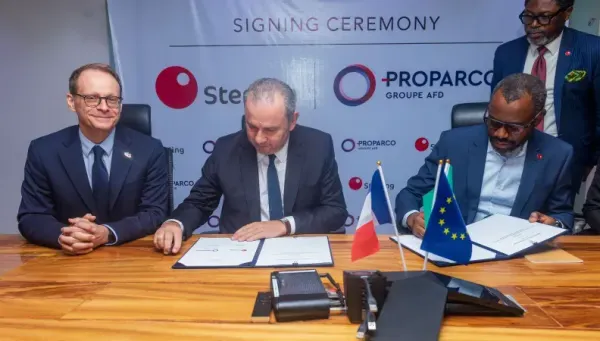

Sterling Bank has signed a $30 million credit facility with Proparco, the French development-finance institution. Most of the money is intended for a specific problem in Nigeria: how households and businesses pay for clean electricity systems without bearing the full equipment cost upfront.
The agreement was announced by Proparco on 29 October 2026 after a signing at Sterling’s Lagos headquarters during a visit by the leadership of Agence Française de Développement.
The planned division is unusually clear. Eighty per cent, or $24 million, is earmarked for renewable energy, with the remaining $6 million for agricultural small and medium-sized businesses, according to Punch’s reporting of the transaction.
Financing the switch from generators
Solar technology is no longer novel. Financing it can still be difficult. A small manufacturer or cold-chain operator may know how much diesel it burns in a month but lack the cash to replace generators with solar equipment and batteries.
A lender that can spread the purchase cost over an appropriate period may turn an attractive operating saving into an affordable investment. But the economics depend on equipment performance, borrower credit, currency exposure and how the lender prices the transaction.
Sterling says its renewable-energy allocation will focus particularly on decentralised power, including off-grid systems. It does not mean the bank has already financed $24 million of installed panels, batteries or other equipment. The announcement describes a financing line to the bank, not completed project spending.
Agriculture receives a separate allocation
The agricultural portion is smaller but addresses a related problem. Farmers, processors and traders often need working capital for supplies, storage and transport before a harvest or sales cycle produces revenue. Commercial banks can be reluctant to finance businesses whose cash flows are seasonal or exposed to supply disruptions.
The November 2 Shore Africa account confirms the 80/20 allocation. It does not provide a public list of approved farmers or borrowers, and it does not establish the interest rates that the intended customers will receive.
A development-finance lender can reduce an institution’s funding constraints. Whether those benefits reach a small business depends on Sterling’s underwriting, repayment terms, collateral policies and ability to reach customers outside major cities.
Keep it separate from the other French deal
During the same AFD leadership visit, Nigeria’s Bank of Industry also signed a different $30 million loan with AFD to back creative businesses. The two facilities should not be merged into one Sterling commitment or mistakenly described as venture capital.
For the renewable-energy allocation, the useful follow-up is not another total raised. It is how many installations are financed, whether users are replacing generator fuel rather than adding costly new debt, and what happens when equipment needs servicing. For agricultural borrowers, watch loan conditions, repayment outcomes and actual disbursements.
The first agreement has been signed. The proof of its value will come from customer-level financing that businesses can afford.