

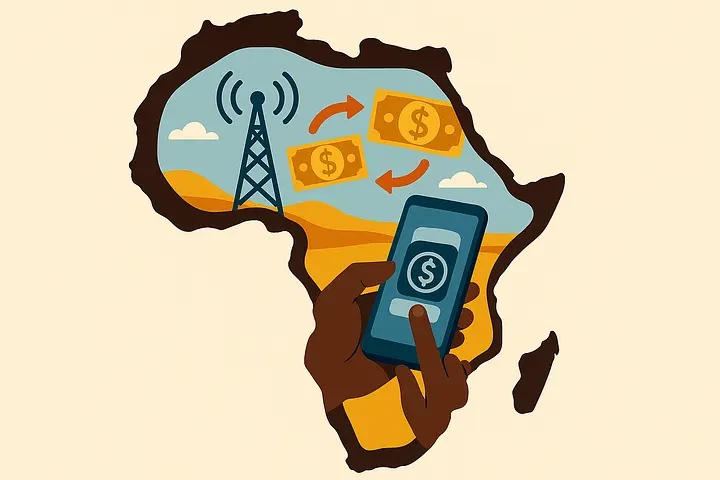

If you want to understand where crypto capital is actually going in Africa, ignore the speculation and follow the stablecoins. In May 2026, stablecoin infrastructure companies accounted for roughly 70% of all disclosed venture activity on the continent, a striking concentration in a month that was otherwise the slowest of the year for fundraising once a single large global deal was set aside.
This is not a one-off. From January through May 2026, stablecoin infrastructure companies raised about $47 million across six deals, with the size of individual rounds rising each month.
Why stablecoins, why now
The appeal is brutally practical. Sending money across African borders, or between Africa and the rest of the world, has long been slow and expensive, with banks charging high fees and settlement taking days. Stablecoins, digital tokens pegged to a currency like the US dollar, settle in near real time at a fraction of the cost. For businesses moving money across corridors, that is not a novelty; it is a cheaper, faster rail.
Adoption data backs the thesis. In Nigeria, the continent’s most active market, Web3 startups raised $43 million in 2025 with about 89% going to stablecoin-linked products such as payments and fiat-crypto exchange. Crucially, usage is shifting from speculation toward utility: more people are using stablecoins as a hedge against currency volatility and a tool for remittances, even as speculative trading volumes cool.
A stack, not a single product
What makes the current wave interesting is that different companies are building different layers of the same system. There are consumer wallets, institutional APIs, card-issuing rails that let people spend stablecoins through ordinary card networks, and working-capital facilities that pre-fund cross-border transfers. No single company has yet established itself as the dominant layer, which is exactly why capital keeps arriving: investors, both global crypto funds and African institutional players, are placing bets across the stack while it is still being built.
The risks
The obvious one is regulation, and it is unsettled. African governments are moving at different speeds and in different directions. Kenya has advanced licensing rules bringing virtual-asset providers under its markets regulator; Nigeria’s securities regulator has moved to classify digital assets as securities; Ghana has signalled a dedicated virtual-assets office. That patchwork creates compliance complexity for any company operating across borders, and a sudden policy shift in a major market could reprice the whole segment overnight.
There is also concentration risk. A funding base that leans this heavily on one use case, dollar-denominated cross-border payments, is exposed if dollar liquidity tightens, if a major stablecoin issuer wobbles, or if regulators decide that tokens functioning as everyday money belong under far stricter rules.
Why it matters
For all the noise around African crypto over the years, this is the most grounded the sector has looked: real volumes, real cost savings, and capital flowing toward infrastructure rather than tokens. The open question is whether stablecoins remain a payments-rail story, useful, contained, and increasingly regulated, or whether they grow into something governments feel compelled to confront head-on. Either way, the quiet truth of African crypto in 2026 is that the money has found its use case, and the builders are racing to own the rails.
This article is for general information and is not financial advice.