
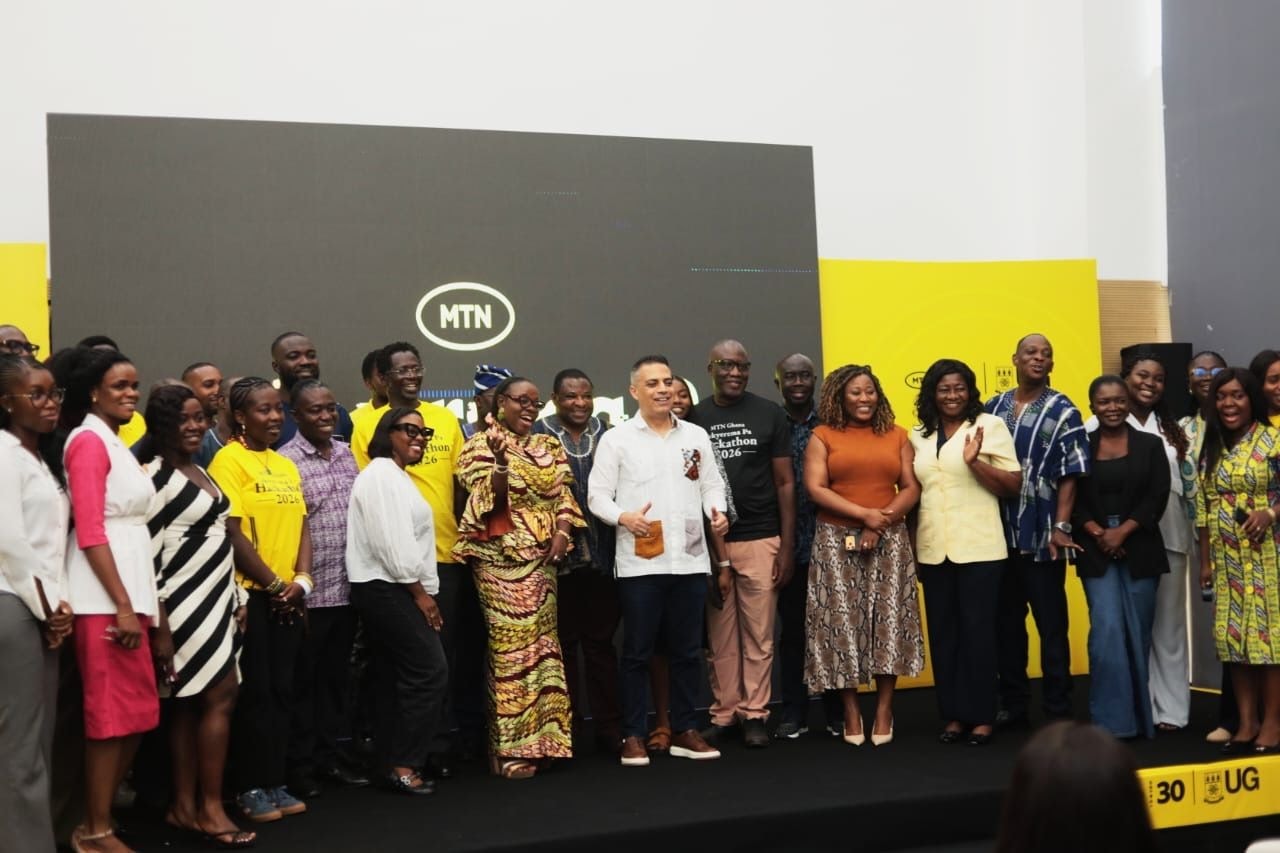

MTN Ghana and the Kwame Nkrumah University of Science and Technology have signed an agreement that connects artificial-intelligence research, student training and graduate recruitment more directly to the telecom operator’s technology work.
The memorandum covers internships, industry-led training, hands-on digital projects, joint research and recruitment pathways. It also includes a focus on homegrown AI and stronger participation by female students in science, technology, engineering and mathematics. Graphic Online reported the agreement on October 23.
That combination turns the partnership into more than a scholarship or sponsorship programme. MTN is creating a route through which university work can enter company problems, and students can move from academic projects into industry roles.
The gap is not only technical skill
African companies frequently say they struggle to find experienced AI talent. Universities, meanwhile, can produce strong students whose projects never encounter production data, enterprise constraints or the operational standards of a large technology company.
An industry-academia partnership can narrow that gap if it exposes students to real problem statements before graduation.
For MTN Ghana, the benefit is early access to a talent pool and research capacity. For KNUST, the benefit is a clearer connection between academic work and the systems, datasets and commercial questions that graduates will meet in employment.
The useful part is the continuity. Internships, training modules, digital projects and recruitment are more powerful when they form a sequence rather than separate programmes.
Research becomes more valuable when a user is waiting
University AI projects often demonstrate that a model can work. Industry needs the next layer: reliability, security, maintainability, cost and integration with existing systems.
A telecom operator has many problems that can test those requirements. Network optimisation, customer support, fraud detection, energy management, demand forecasting and service personalisation all create applied research questions.
MTN Ghana and KNUST have not said every research project will be commercialised, and it would be premature to assume that. But an established channel between researchers and an operating company increases the chance that useful work is tested beyond the classroom.
That matters for local AI because Ghanaian datasets, languages and operating conditions are not always well represented in products developed elsewhere.
Talent pipelines are becoming an infrastructure decision
Companies can recruit from the open market after talent is fully trained, or they can help shape the training pipeline earlier. In a fast-moving field such as AI, the second approach can be more reliable.
It also creates a feedback loop for universities. When employers regularly engage with students and faculty, curricula and research priorities can respond more quickly to changes in tools and production requirements.
The risk is that university research becomes too narrowly shaped by one corporate partner. A healthy collaboration needs room for academic independence and broad student development, even when projects are commercially relevant.
The opportunity, however, is substantial. A university can become a recurring source of research and talent rather than a place a company visits only for recruitment fairs.
Why it matters
Africa’s AI constraint is not only access to models or GPUs. It is the number of people who can turn those resources into reliable systems for local institutions.
MTN Ghana’s KNUST partnership tackles that problem at the transition between education and work. If students can move through industry training, applied projects and internships before graduation, companies spend less time bridging the gap after hiring.
For other African technology firms, the model is replicable. A durable university partnership can create a talent and R&D pipeline that is harder for competitors to copy than a one-off hiring campaign.
What to watch
The next evidence should be concrete: how many students participate, which research areas receive support, how many internships convert into jobs and whether any joint projects reach production.
It will also be worth watching the female-STEM component. If the partnership expands participation as well as total talent supply, it could improve who gets access to Ghana’s growing AI labour market rather than simply training the same narrow pool more intensively.