

A lender does not always need a new pile of cash to make more loans. Sometimes it needs someone else to absorb part of the risk if those loans go wrong.
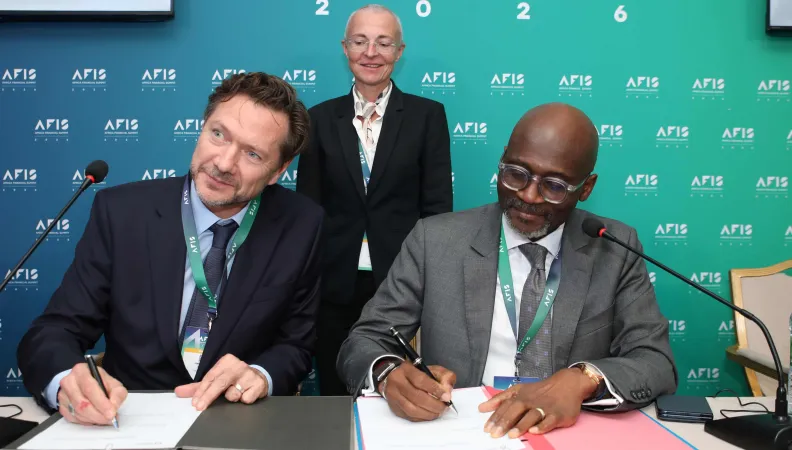
That is the purpose of the $10 million in portfolio guarantees announced for Ecobank’s Democratic Republic of Congo subsidiary during the Africa Financial Summit in Luanda. In its 4 November 2026 release, French development-finance institution Proparco said it was working with the European Union and Ecobank to expand credit for micro, small and medium-sized businesses.
Ecobank has not raised $10 million in equity. Nor does the agreement mean $10 million has already been distributed to Congolese businesses. Guarantees are a financing instrument that changes how a bank carries credit risk.
Two guarantees, two lending problems
The package comprises two portfolio guarantees totalling $10 million. One is intended to support growth in Ecobank DRC’s mainstream small-business loan portfolio. The second is directed at borrowers who can be harder to reach through conventional credit criteria: businesses run by women and young people, startups, and enterprises in agriculture, health, education and green activities.
The Ecobank announcement issued on 3 November describes the partnership as a way to address the collateral and risk barriers that keep otherwise viable small firms from formal finance.
For a founder, this distinction is practical. A programme that partially protects the lender may make a bank more willing to consider a business without extensive property security. It does not automatically make an unaffordable loan affordable, and the bank still has to assess the applicant’s capacity to repay.
What cannot be concluded yet
The parties have announced the guarantee amount, but not a list of approved customer loans, a volume of new disbursements or an independently verified number of jobs created. Those numbers need to come later.
Nor does a guarantee tell a customer what interest rate, collateral requirement or tenor will be offered. Banks may apply additional internal eligibility conditions, and a guarantee can be unused or underutilised if viable borrowers cannot be found or assessed.
The agreement is the first Impact+ guarantee Proparco has signed with Ecobank Group, according to the institution. Ecobank operates across dozens of African markets, but this specific $10 million arrangement is for the DRC subsidiary. It should not be counted as a continent-wide cash injection.
The follow-through
The most valuable reporting will be at the branch and customer level. How many additional Congolese firms receive credit? What share reaches first-time borrowers, women-owned businesses and young entrepreneurs? And are those loans affordable enough to be used productively?
Without those answers, the announcement is a commitment to share risk, not evidence that access to credit has already improved. The instrument is clear. Its impact still has to be demonstrated.