

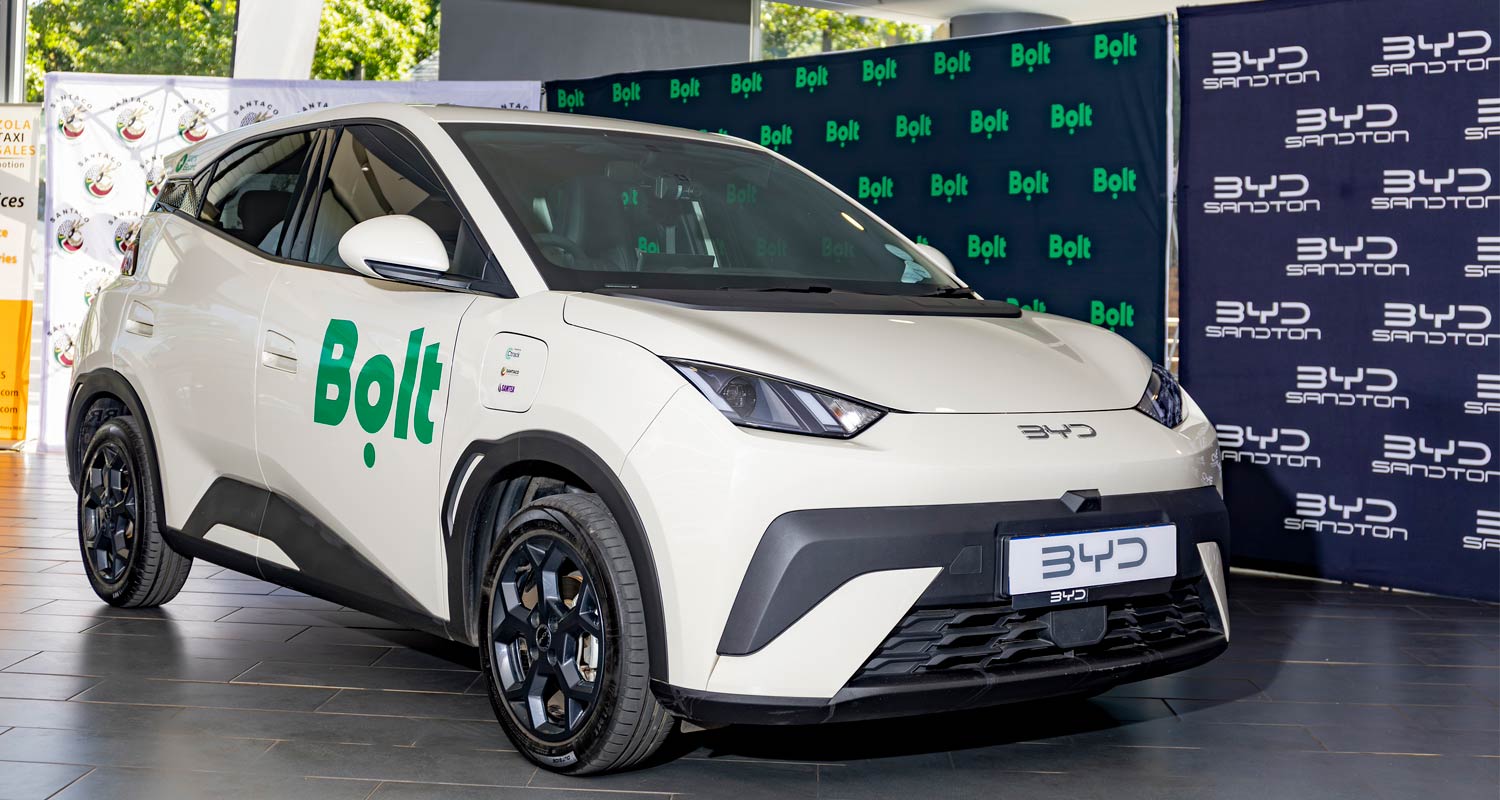

Bolt’s electric-vehicle category is now live in Johannesburg, but the most interesting part of the launch is not the badge inside the app. It is who owns and operates the cars.
The South African Meter Taxi and E-Hailing Association, or SAMTEA, will own and manage the Johannesburg EV fleet, according to information supplied by Bolt to TechCentral. The rollout also involves Chinese automaker BYD and follows Bolt’s EV-category launch in Cape Town earlier in 2026.
That structure gets closer to the core constraint in African ride-hailing electrification. Drivers may benefit from lower energy and maintenance costs, but the upfront cost of an electric vehicle can still be too high for an individual driver to carry comfortably. Fleet ownership moves that capital problem to an organisation that can finance, manage and utilise vehicles at scale.
The fleet is the business model
Ride-hailing platforms do not need to manufacture electric cars to push electrification. They do, however, need enough reliable vehicles on the road for a dedicated category to make sense.
In Johannesburg, SAMTEA gives Bolt a fleet operator that can handle vehicle ownership and management. Bolt provides demand through its platform. BYD provides the vehicles. The arrangement separates the asset owner from the marketplace that supplies rides.
That may be more practical than asking thousands of drivers to independently finance new EVs and solve charging, maintenance and resale risk on their own.
Bolt says it is targeting 500 electric vehicles across South Africa by December 2026. Connecting Africa reported that the Johannesburg expansion builds on the company’s earlier Cape Town launch and sits within a broader push to scale electric mobility in the country.
Utilisation is what makes the economics work
An electric vehicle can have lower running costs than an internal-combustion vehicle, but those savings become more meaningful when the car is driven heavily. Ride-hailing fleets are therefore a natural test bed because commercial vehicles accumulate more kilometres than most private cars.
High utilisation also creates operational pressure. Cars need dependable charging access, predictable downtime, maintenance support and route planning that does not leave a driver stranded between trips.
That is why a fleet model matters. A fleet owner can coordinate charging and maintenance across many vehicles, collect performance data and negotiate financing or service arrangements at a scale an individual driver cannot.
The Johannesburg service is initially concentrated in selected areas, including Sandton and airport routes. Bolt has not disclosed the size of the initial Johannesburg fleet. That is a useful reminder that a new category in an app is not the same thing as a city-wide transition.
Industry politics are part of the rollout
SAMTEA is affiliated with the South African National Taxi Council. Its involvement is notable because relations between traditional taxi structures and e-hailing platforms have often been tense.
The EV initiative creates a different basis for cooperation. Instead of competing only over passengers, an association can participate in fleet ownership and the economics of a new vehicle category.
That does not remove broader disputes in South Africa’s transport market, but it shows how electrification can create new commercial roles for existing industry groups.
For Bolt, the partnership also reduces the need to own a large vehicle balance sheet directly while still influencing the type of cars available on its platform.
Why it matters
African EV discussions often focus on vehicle prices, import duties and charging networks. Commercial adoption also depends on who carries the asset risk.
If fleet owners can finance EVs, keep them highly utilised and share lower operating costs with drivers, ride-hailing could become one of the faster paths to urban electrification. If financing or charging breaks, the category will remain a small premium option regardless of how attractive the vehicles look.
The Johannesburg launch is therefore less a verdict on EV demand than a test of an operating structure.
What to watch
The useful metrics will be fleet growth, vehicle utilisation, driver economics, charging downtime and the cost of rides compared with Bolt’s standard categories. Bolt’s national target of 500 EVs by December is a clear near-term marker.
Also watch whether SAMTEA expands its ownership role and whether similar association-led fleets appear in other African cities. If the model travels, the important export may be the financing and fleet structure rather than the specific vehicle.