

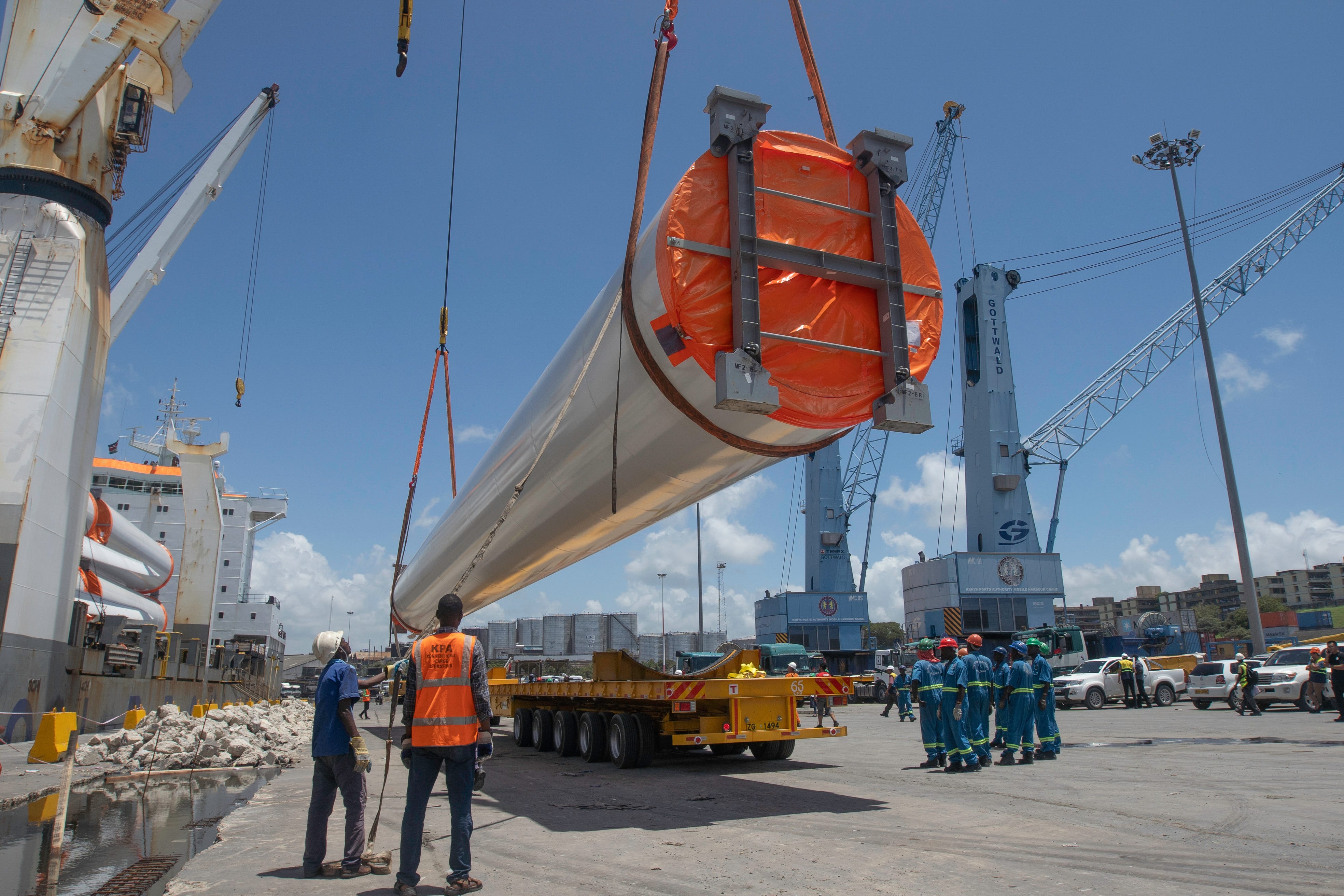

More than $11 billion in renewable energy investments announced in Nairobi this week show how Africa’s energy transition is moving beyond climate language and into industrial strategy.
The commitments, unveiled around the Africa Forward Summit, cover sustainable aviation fuel, hydropower, solar, wind and clean cooking. They include a planned Kenya Airways and Rubis Energy sustainable aviation fuel facility in Kenya, a TotalEnergies investment pipeline across African energy projects, an EDF-backed hydropower plan, a solar project in Zambia and an expansion of Kenya’s Kipeto wind project.
That mix matters. Africa’s clean energy opportunity is not only about adding megawatts to the grid. It is about whether renewable power can support aviation, logistics, manufacturing, household energy, food systems, digital infrastructure and new industrial value chains.
Kenya wants fuel production, not only fuel imports
The planned sustainable aviation fuel facility is one of the more important pieces of the announcement.
Kenya Airways and Rubis Energy signed an agreement to develop what the companies describe as East Africa’s first sustainable aviation fuel production unit. The facility is expected to produce 32,000 metric tons of sustainable aviation fuel annually and use locally available feedstocks such as waste oils and fats.
For Kenya, this is not just an airline decarbonisation project. It is a localisation story.
Aviation fuel is a strategic input. Producing a lower-carbon version locally could reduce import dependence, build technical capacity, create new supply chains around waste feedstock, and position Kenya as a regional hub for cleaner aviation fuel.
George Kamal, acting CEO of Kenya Airways, framed the project around that shift from import dependence to local production.
While we currently depend entirely on imports, this refinery allows us to produce a sustainable, local version of that fuel.
That line captures why the deal matters. Africa’s energy transition becomes more useful when it creates production capacity, not only consumption targets.
Renewable energy has to support industry
Kenyan President William Ruto also made the broader industrial point clearly at the summit.
For Africa, this energy transition must also be an industrial transition.
That is the right frame.
Africa has major renewable energy potential, but the continent’s development challenge is not solved by exporting clean power narratives. The harder question is whether renewable energy can support factories, data centres, logistics networks, ports, cold chains, transport, mining, food processing and household energy access.
That is where clean energy becomes economic infrastructure.
Solar plants matter. Wind farms matter. Hydropower matters. But they matter most when they lower the cost of doing business, improve reliability, reduce household energy poverty and support production.
Africa does not need a green transition that leaves countries as raw-resource exporters or passive hosts for foreign projects. It needs energy systems that support value creation.
The size of the commitments is significant
The headline numbers are large.
TotalEnergies plans to spend $10 billion in Africa by 2030, including a $2 billion renewable energy project in Rwanda and $400 million for clean cooking initiatives in Kenya, Uganda and Tanzania. EDF announced plans for a 2-gigawatt hydropower project. Global Telecom committed $350 million toward a 250-megawatt solar plant in Zambia, while Meridian said it would invest $200 million to double Kenya’s Kipeto wind project to 200 megawatts.
Those projects touch different parts of the energy market.
Solar and wind support power generation. Hydropower can provide large-scale baseload and grid stability where properly designed. Clean cooking addresses household energy, health, gender and environmental pressure. Sustainable aviation fuel links climate policy to transport and industrial processing.
That spread is important because Africa’s energy problem is not one problem.
It is a grid problem, a household energy problem, an industrial power problem, a transport fuel problem and a financing problem at the same time.
Clean cooking should not be treated as a side issue
Clean cooking is often treated as a development topic rather than a technology and infrastructure story. That is a mistake.
Hundreds of millions of Africans still rely on polluting fuels for cooking. The consequences cut across health, climate, household productivity, deforestation and gender inequality. If TotalEnergies’ planned clean cooking investment in Kenya, Uganda and Tanzania translates into real access, it could affect millions of households beyond the usual corporate energy narrative.
This is where TechCocoon should pay attention.
CleanTech is not only solar farms and electric vehicles. It includes the everyday energy systems that determine how households live and how informal businesses operate.
A clean cooking market with better financing, distribution and last-mile infrastructure could become a serious African technology and investment category. But it will require more than pledges. It needs affordability, distribution, behaviour change, local servicing, safety standards and patient capital.
The risk is announcement fatigue
Africa has heard large investment announcements before.
The test is not what gets announced in Nairobi. The test is what gets financed, built, connected, maintained and used.
Large energy commitments can stall if land acquisition is slow, grid connections are weak, tariffs are unclear, government guarantees are difficult, local communities are ignored, or financing terms become too expensive. Sustainable aviation fuel projects can also struggle if feedstock supply, refinery economics, airline demand and certification pathways are not strong enough.
That is why the next phase matters more than the summit headline.
The Kenya Airways–Rubis project will need engineering, financing, feedstock aggregation, regulatory support and aviation-sector demand. The hydropower and solar projects will need bankable contracts, grid readiness and environmental discipline. Clean cooking investments will need real household adoption.
The difference between investment theatre and industrial strategy is execution.
African startups should watch the supply chains
These deals are not only relevant to governments and multinational energy companies.
They could create opportunities for African startups and operators working in waste collection, biofuel feedstock aggregation, energy data, carbon measurement, logistics, household energy distribution, asset financing, grid analytics, rural energy, clean cooking devices, industrial monitoring and maintenance.
The sustainable aviation fuel project is a good example. If the facility depends on used cooking oil, waste animal fats and other feedstocks, someone has to collect, verify, transport and manage those inputs. That creates room for local supply-chain companies, data platforms and logistics operators.
The same applies to clean cooking. Distribution, financing, after-sales service and user education all create business opportunities if the market is structured well.
The clean energy transition will not be built only by utilities. It will need a wider layer of African companies solving practical operating problems.
The implication for African tech
Africa’s clean energy push is becoming a technology, infrastructure and industrial story.
The continent needs more power, but it also needs productive use of that power. It needs cleaner aviation fuel, but also local refining and feedstock systems. It needs clean cooking access, but also last-mile distribution and consumer financing. It needs solar, wind and hydropower, but also grids, storage, regulation and bankable demand.
That is why these Nairobi commitments matter.
They show that Africa’s energy transition is moving into harder, more useful territory. The opportunity is no longer just to install capacity. It is to build industries around clean energy.
For founders, that means some of the strongest climate opportunities may sit inside the boring parts of the value chain: aggregation, measurement, distribution, maintenance, financing and compliance.
For investors, the signal is clear: Africa’s CleanTech market should not be read only through generation assets. The next wave of value may come from the companies that make those assets usable.