

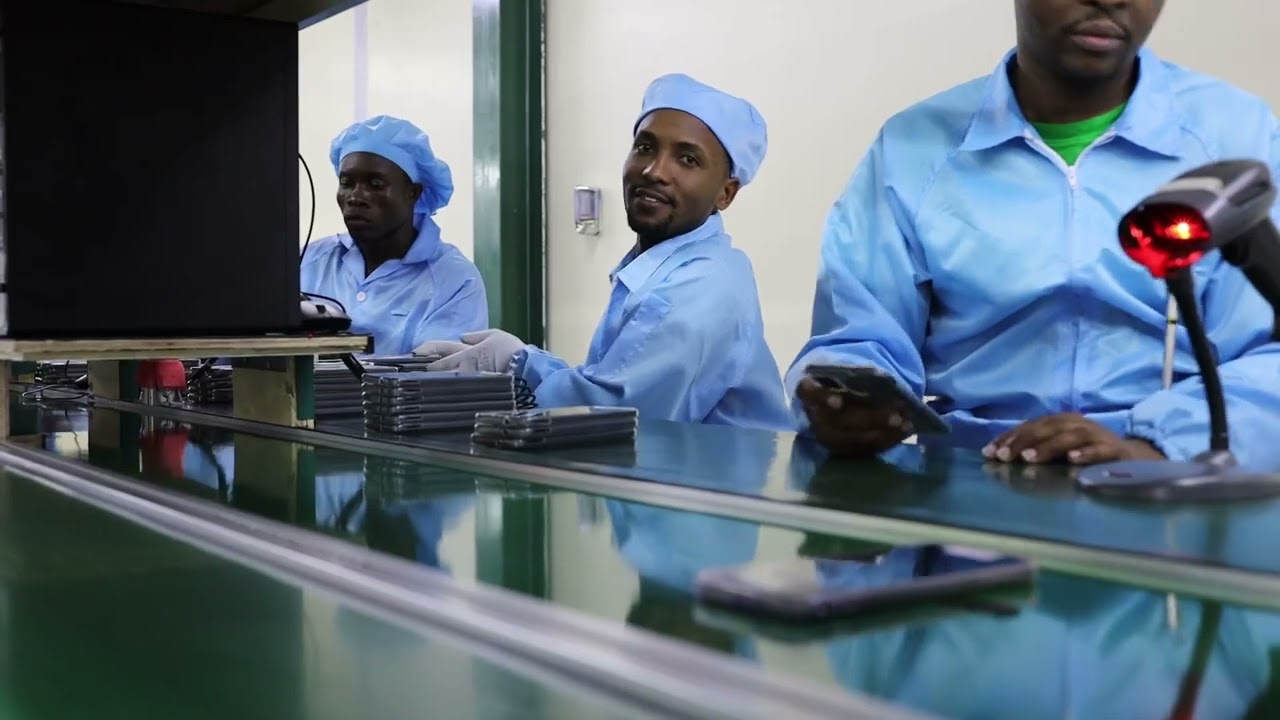
Kenya’s low-cost smartphone assembly industry is facing a new cost problem from an unlikely source: the global race to build artificial intelligence infrastructure.
Memory chips used in smartphones, laptops, and other consumer electronics have become more expensive as major technology companies increase spending on AI data centres. That shift is now putting pressure on Kenya’s affordable smartphone model, where local assemblers and device-financing companies have relied on low-cost hardware to reach first-time internet users and lower-income households.
The issue is not only about phone prices. In African tech, affordable smartphones are the gateway to almost everything else: mobile money, digital credit, e-commerce, online learning, health services, public platforms, and small-business tools. If devices become more expensive, the cost of digital participation rises with them.
The AI boom is moving through the hardware supply chain
AI demand is reshaping the global semiconductor market.
Large cloud and AI companies are buying more advanced memory for data centres, including high-bandwidth memory used in AI workloads. As chipmakers allocate more capacity toward those higher-margin buyers, manufacturers of lower-cost consumer electronics are feeling the squeeze.
In Kenya, that pressure is already visible. Memory chips used in locally assembled smartphones have reportedly become significantly more expensive over the past year, affecting companies that build or finance affordable devices for mass-market users.
M-Kopa’s manufacturing lead, Ismael Abisai, described the pressure clearly:
Demand for AI memory is very high, which means manufacturers are dedicating the majority of their capacity to AI. That has pushed up the cost of memory for us significantly.
He added that some memory costs have risen from about $19 to $65, a jump that changes the economics of budget devices. (Business Daily)
That is the hidden link between AI infrastructure and African digital access. A data-centre buildout in one part of the world can raise input costs for a low-income smartphone buyer in Nairobi, Kisumu, Eldoret, or Mombasa.
Kenya’s affordable-device model depends on tight margins
Kenya’s smartphone assembly push has grown around a simple promise: make internet-ready devices more affordable and easier to pay for.
Companies such as M-Kopa, Sun King, and East Africa Device Assembly Kenya Limited have helped build a market where locally assembled or financed smartphones can be bought through deposits and daily, weekly, or monthly instalments. That model matters because many first-time users cannot pay the full price of a smartphone upfront.
M-Kopa assembles about 7,500 smartphones daily using components sourced from Chinese original design manufacturers, then installs Android software licensed by Google. The company targets low-income consumers through hire-purchase arrangements, allowing buyers to spread payments over time. (Business Daily)
That model works best when device costs are predictable. If memory prices keep rising, companies face a hard choice: absorb the cost, reduce specifications, extend repayment periods, or raise prices.
None of those choices is simple.
Absorbing costs protects users but hurts margins. Reducing specifications can weaken the user experience. Longer repayment periods may increase credit risk. Higher prices can push first-time users out of the market.
Local assembly is exposed to global shocks
Kenya has tried to build more local value into the smartphone market. That strategy became more visible after government incentives supported local production, while import duties made assembled devices more competitive.
The local assembly push has produced real activity. M-Kopa says it has produced more than 3.2 million devices since entering assembly in January 2023 and refurbished more than 300,000 others. East Africa Device Assembly Kenya Limited, a joint venture involving Safaricom, Jamii Telecommunications, and Shenzhen TeleOne Technology, produced 360,000 devices in its first year of operation in 2024. (Business Daily)
But local assembly does not remove global dependency.
Many critical components are still imported. Memory, processors, displays, batteries, cameras, and other parts remain tied to global supply chains. When those chains tighten, local manufacturers feel the pressure quickly.
That is why Kenya’s smartphone strategy needs to be read honestly. Assembly can improve access, create jobs, build technical capacity, and reduce some costs. But it does not make the industry immune to semiconductor cycles.
Financing may become more important
As hardware costs rise, device financing becomes even more important.
M-Kopa’s model is built around spreading the cost of devices over time. That helps users who cannot afford a full cash purchase. But financing is not a magic solution when component costs rise sharply. It only shifts how the cost reaches the customer.
If device prices go up, daily or weekly payments may rise. If companies try to keep payments stable, repayment periods may stretch. If margins shrink, financing providers may need to tighten eligibility or accept more risk.
That matters because smartphone financing sits at the intersection of hardware, credit, and digital inclusion.
A low-cost phone is not just a device. It is the first step into digital services. If that first step becomes more expensive, the users most affected will be the ones least able to absorb the increase.
The wider African implication
Kenya is not the only market exposed to this problem.
Across Africa, smartphone affordability remains a major barrier to internet adoption. Many users rely on entry-level Android devices, second-hand phones, instalment models, or operator-led financing. If the global AI chip boom keeps pushing up memory prices, other African markets may face similar pressure.
This could affect more than handset sales.
Mobile-first startups depend on affordable devices. Fintechs need users with reliable smartphones. Edtech platforms need students with usable screens and storage. Healthtech apps need patients and frontline workers with connected devices. E-commerce platforms need customers who can browse, pay, and track orders. Public digital services need citizens who can actually access them.
The African app economy rests on hardware that many users still struggle to afford.
That is why chip prices belong in the African tech conversation.
AI’s cost is not only paid by AI companies
The global AI boom is usually discussed through model launches, cloud spending, chipmakers, data centres, and frontier labs. But its secondary effects are now spreading into other parts of the technology economy.
Smartphone makers are one example.
If chipmakers prioritise data-centre memory because it is more profitable, budget devices can become harder to produce at the same price. If freight costs also rise, manufacturers face another layer of pressure. If consumers cannot absorb those costs, device access slows.
This is the part of AI infrastructure that rarely appears in product demos.
AI is not only changing software. It is competing for physical inputs that other technology sectors also need.
For Africa, that means the cost of AI infrastructure can show up indirectly in the price of digital inclusion.
What operators should watch
Kenyan device assemblers and financing companies now have to watch several moving parts.
Memory prices are the first. If DRAM and NAND costs continue rising, low-cost smartphone pricing will remain under pressure.
Freight is the second. Shipping disruptions and air cargo constraints can increase timelines and costs for companies sourcing parts from Asia.
Consumer repayment behaviour is the third. If phones become more expensive, instalment models may face higher default risk or slower adoption.
Device specifications are the fourth. Manufacturers may be tempted to reduce RAM or storage to protect price points, but weaker devices can frustrate users and reduce the usefulness of digital services.
Policy is the fifth. Kenya’s local assembly strategy may need fresh support if global supply conditions make affordable-device production harder.
The harder test ahead
Kenya’s budget smartphone push is still important. It has helped bring more people into the digital economy and created a local assembly base that did not exist at the same scale a few years ago.
But the AI chip boom shows how fragile affordability can be when local access depends on global supply chains.
For African tech, the lesson is clear. Digital inclusion is not only about apps, wallets, fibre, or mobile money. It also depends on the physical device in the user’s hand.
If that device becomes too expensive, the next wave of African digital services will have a smaller market to serve.
Kenya’s smartphone assemblers may find ways to absorb costs, redesign devices, negotiate better supply terms, or stretch financing models. But the pressure is real.
The AI race is no longer happening only in data centres. Its cost is beginning to show up at the edge of the African digital economy.