

The Africa Forward Summit opened in Nairobi with a clear message: Africa’s next investment partnerships will not be judged only by aid, diplomacy, or trade language. They will be judged by what they build.
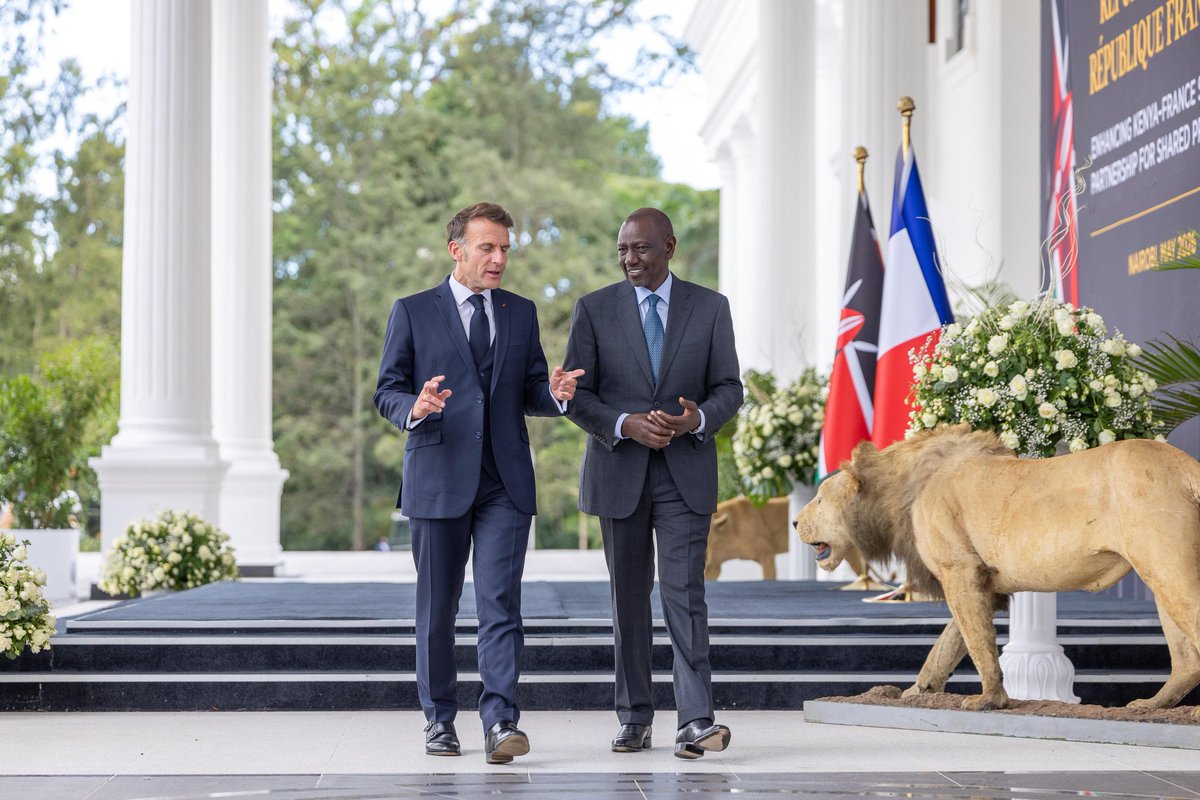
Co-hosted by Kenya and France on May 11–12, 2026, the summit brings together more than 30 African heads of state, over 1,500 business leaders, investors, innovators, and development institutions around a broad agenda covering AI, energy, finance, agriculture, health, the blue economy, infrastructure and industrialisation.
That mix matters. Technology is no longer sitting at the edge of African economic diplomacy. It is becoming part of how countries negotiate ports, power, digital infrastructure, food systems, trade corridors and capital flows.
The summit is about more than France
France is trying to reset its relationship with Africa at a difficult moment. Its influence has weakened in parts of Francophone West Africa, while competition from China, Russia, Gulf states, Turkey, India and African capital itself has become more visible. The Nairobi summit is the first Africa–France summit hosted in an English-speaking African country, a deliberate shift in tone and geography.
But the more important story is Africa’s leverage.
Kenya is not hosting the summit as a passive recipient of foreign interest. It is using the platform to push investment, infrastructure financing, debt reform, trade access and the African Continental Free Trade Area as part of a broader economic agenda.
That is the part African tech should watch.
When governments talk about AI, digital infrastructure, logistics, energy and agriculture in the same room as investors and multinational firms, the outcome can shape the operating environment for founders, data-centre operators, telecom companies, logistics startups, agritech platforms, fintechs and enterprise software providers.
Investment is moving into harder infrastructure
The summit’s investment language is heavy on infrastructure.
French President Emmanuel Macron announced €23 billion in investments tied to the summit, including €14 billion from French entities and €9 billion from African investors. The areas highlighted include energy transition, digital and AI, the maritime economy and agriculture.
One concrete deal is CMA CGM’s planned €700 million investment to modernise a terminal at the Port of Mombasa, a logistics move that matters beyond shipping. Ports are part of the physical infrastructure that makes e-commerce, manufacturing, exports, agriculture and regional trade work.
Kenya’s Presidency also said Kenya and France signed 11 agreements, including a joint venture to develop and finance logistics and port infrastructure worth about KSh104 billion, alongside agreements touching connectivity enhancement, agriculture, transport and other areas.
For technology companies, this is the real connection: digital growth depends on physical systems.
A logistics startup needs ports, roads and customs systems. An agritech platform needs export channels and storage infrastructure. A fintech needs trade flows and merchant activity. A cloud or AI business needs power, fibre, data centres and enterprise demand.
African tech does not scale in isolation. It scales on top of infrastructure.
AI is becoming an investment language
AI is now part of almost every serious economic conversation, and the Africa Forward Summit is no exception. The official summit agenda includes AI among the seven roundtable themes, while the investment announcements include digital and AI as priority areas.
That does not mean every AI announcement will produce meaningful local capacity.
The danger is that AI becomes a diplomatic keyword without enough compute access, data infrastructure, skills development, local-language systems, responsible policy, or practical use cases. African governments and investors should be careful not to confuse AI branding with AI readiness.
The opportunity, however, is real.
If AI investment is tied to local cloud infrastructure, public-service productivity, agriculture, health systems, logistics, education and African-language tools, it can become useful. If it stays at the level of speeches, pilots and imported platforms, it will add less than promised.
The difference will be execution.
Kenya is positioning itself as a deal platform
Kenya’s role in the summit is significant.
Nairobi already has one of Africa’s stronger digital economies, supported by mobile money adoption, a visible startup market, regional headquarters, improving connectivity and a government that has actively marketed Kenya as an investment gateway.
Hosting Africa Forward gives Kenya a chance to turn that positioning into deal flow.
The summit’s structure reflects that ambition: a business forum with 1,500+ business leaders, B2B matchmaking, workshops and networking, followed by a heads-of-state summit with the African Union and more than 30 CEOs.
That matters because African tech needs more than demo days. It needs procurement access, corporate partnerships, patient capital, infrastructure finance, public-sector demand and regional market access.
If the summit can move beyond ceremony into bankable projects, it may help connect African operators to larger pools of capital and industrial demand.
The risk is familiar: announcements without execution
Africa has seen many summits, pledges and partnership statements. The test is never the size of the announcement on day one. The test is what gets financed, built, governed and maintained after the cameras leave.
That caution applies here.
A €23 billion headline is politically useful. But African founders and operators need to know what portion becomes accessible investment, what portion is already-planned corporate spending, what is new capital, what comes with debt obligations, what is tied to procurement conditions, and what will reach local companies rather than only large multinationals.
The same caution applies to AI and digital investment. A project described as digital does not automatically strengthen African tech. It must create skills, infrastructure, markets, data capacity, local partnerships or useful public services.
Otherwise, the continent gets visibility without depth.
What African tech should watch
There are several signals to track after the summit.
The first is whether the Mombasa port investment and related logistics deals move from agreement to execution. Better port and logistics infrastructure could affect regional trade, e-commerce, manufacturing, agriculture exports and supply-chain technology.
The second is whether the AI and digital commitments produce specific programmes: cloud infrastructure, startup procurement, data centres, AI training, local-language tools, public-sector deployments or research partnerships.
The third is whether African firms participate meaningfully in the announced investments or remain subcontractors beneath large foreign companies.
The fourth is whether the summit gives smaller African markets access to partnerships, not just countries with the strongest diplomatic or infrastructure visibility.
The fifth is whether France’s reset with Africa becomes more commercial and less paternalistic in practice.
The bigger implication
The Africa Forward Summit is useful because it shows where African tech is heading.
The next phase will not be shaped only by software startups raising venture capital. It will be shaped by ports, power, cloud infrastructure, AI capacity, agriculture systems, telecom networks, public procurement, logistics corridors and financing reform.
That is not less “tech.” It is the infrastructure that decides whether technology companies can scale.
For founders, the implication is clear: the biggest opportunities may sit inside hard sectors that require partnerships, regulation and patient execution.
For investors, the signal is just as important: African technology growth is becoming more tied to infrastructure and policy than to app-layer optimism alone.
For governments, the message is direct: summits only matter if they turn into systems that builders can use.
Africa Forward may be a diplomatic reset for France. For African tech, it should be read as something sharper: a reminder that the continent’s digital future will be built where innovation meets infrastructure.